










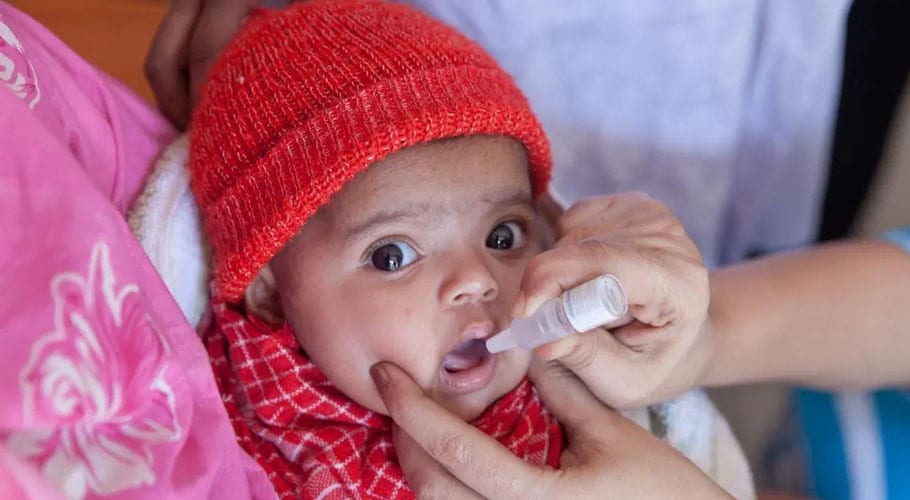
LAHORE: The nations observe the World Polio Day today, a global day to raise awareness and resources in support of the polio eradication effort.
World Polio Day is observed every year around the world on 24th October to end polio.
World Polio Day was initiated by the World Health Organization (WHO) to honour the birth of Jonas Salk, who led the first team to develop a vaccine against poliomyelitis (polio).
In one in every 200 cases, the child suffers irreversible paralysis, usually in the legs. About 10 percent of these children get paralysis of breathing muscles and die.
Unfortunately, Pakistan is one of only three countries in the world, alongside Afghanistan and Nigeria, affected by poliovirus. Nigeria has already marked three years with no new cases and can soon be certified polio-free.
Also read: “World Food Day” being observed globally
According to a report by the Global Polio Eradication Initiative, the number of polio cases has risen sharply in 2019.
The Global Polio Eradication Initiative (GPEI) stated, “There are 72 cases of polio reported in 2019. In 2018, there were 12 reported cases.”
Two polio cases were reported, one each from Karachi Orangi and Karachi Landhi in Sindh province. The samples were collected on 24 and 25 September 2019.
GPEI is focusing on reaching every last child in Pakistan with vaccines, strengthening surveillance and maintaining political commitment, financial resources, and technical support at all levels.
Pakistan, Afghanistan, and Nigeria are the only countries in the world, where polio is an outbreak.
Also read: Anti-polio campaign will begin in Kohistan today
Polio is an infectious disease caused by the poliovirus. People living with polio have the virus in their intestines. Some of this virus comes out every time they poop, creating further chances of transmission.
There are three subtypes of poliovirus: PV1, 2 and 3. Each one is equally virulent. Even if a child is immune to one of these strains, he or she may still get the infection from the other two serotypes.
Regardless of the type, poliovirus targets the nervous system, causing paralysis within a few hours of exposure. The initial symptoms of the disease are fever, headache, fatigue, vomiting, and stiffness in the neck and limbs.
It is possible to prevent polio by stimulating your immune system with vaccination.
Vaccinating individuals, especially young children, can establish lifelong immunity to the disease.
Avoiding food or beverages that may have been contaminated by a person with poliovirus.
1. Checking with a medical professional that your vaccinations are current.
2. Being sure to receive any required booster doses of the vaccine.
Washing your hands frequently.
3. Using hand sanitizer when soap is not available.
4. Making sure you only touch the eyes, nose, or mouth with clean hands.
5. Covering the mouth while sneezing or coughing.
6. Avoiding close contact with people who are sick, including kissing, hugging, and sharing utensils.
ADVERTISEMENT