









Muharram is not only the first month of the Islamic calendar but also one of the most sacred periods for Muslims across the globe.
It was during this period that Prophet Muhammad began his journey from Mecca to Medina. And the tenth day of the month is referred to as the day of Ashura.
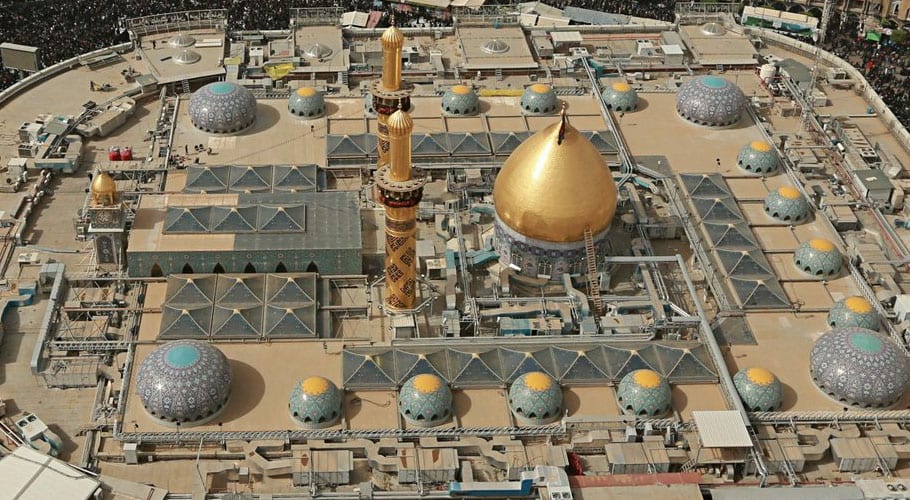
On the smoldering sands of Karbala 14 centuries ago, humankind’s most virtuous characters showed by Imam Hussain (AS), the grandson of Prophet Mohammad (PBUH), his family members and 72 of his loyal followers and its absolute worst, in the shape of the Umayyad imperial horde, were on display.
10th of Muharram (Yaum-e-Ashura)
The real story behind the mourning of Muharram is a very tragic one. On the 10th day of Muharram, also called Ashura, in the 61st year of the Islamic calendar, the fierce Battle of Karbala took place.
Yaum-e-Ashura, the 10th of Muharram is being observed today (Sunday) across the world, including Pakistan.
The month of Muharram is extremely holy for the Muslim community and Shia Muslims mourn the death of Imam Hussein and his family on this day of sorrow. They respect their sacrifice and pray in abundance as well as refrain from all joyous events.
Many dishes are prepared for ‘Niaz’ including haleem, chickpeas and rice, chicken rice and kheer though haleem is the more popular dish for ‘Niaz’.
Sabeel-e-Masumeen
The practice of putting up stalls of drinks for the people participating in mourning processions has a religious as well as historical and geo-cultural significance.
Water and other fluids, therefore, were a necessity for the mourners on a procession. Gradually, it took the form of Sabeel-e-Masumeen during the Islamic month of Muharram.
The literal meaning of the word ‘Sabeel’ is ‘way’. It is believed that Imam Hussain (R.A.), his family and his troops were deprived of water for five days before the battle of Karbala.
They braved these days without food and water but did not give in to the rule of Yazid-bin-Muawiya.
In theory, therefore, a Sabeel is a way to pay tribute to the thirst bore by the Imam (R.A.) and his family, by providing for water and other kinds of drinks to everyone, especially during the Ashura.
The variety of drinks available at different sabeels, from plain water to traditional beverages, chilled milk flavored with nuts and cardamom, and multiple types of tea.
Sabeel stalls can be seen on platforms and pathways at different points along the routes of Moharram processions. Many of these are also set up on trolleys and move along the processions.
Haleem, the household tradition for Muharram
People make the dish at home as well for distributing among neighbors, family and participants of the mourning processions.
Haleem is made with various pulses, spices, chicken or beef and wheat all of which are cooked on slow heat for several hours and is served with naan.
The haleem is garnished with chopped green chilies, diced ginger, fried onions and slivers of lemon.
Haleem is also served a year-long at various restaurants, which also see an increase in demand for the dish during Muharram.
Remembrance ceremonies of Imam Hussain
The devotions during Ashura have evolved to represent two major ritual expressions.
The first, known as rawzeh-khani, involves preaching that is based on the Karbala narrative and, over the ten-day period, a formal recounting of the events is made in the context of the Shia interpretation of Muslim history, with a special focus on notions of persecution, suffering, resistance, and martyrdom.
Another major ritual expression developed much later in history and is known as taqiyya, a form of passion play that re-enacts the events of Karbala.
During these rituals, some participants express their internal grief through acts of chest-beating and flagellation.
Ta’ziyya processions can be highly stylized and may include structures representing Imam Husayn’s bier and a rider-less horse.
Imam Husayn’s life and death are also evoked in special poems of remembrance that have been composed to highlight key themes such as justice, devotion, and courage in the face of oppression.
Although a significant part of the focus of these expressions is found in Shia literature and cultural life, Imam Husayn’s example has pervaded all periods of Muslim history, thought, and culture, and it transcends geographic and ethnic differences.
Lesson of Karbala
Although Imam Hussain was slain in the battle, his message of kindness, justice and equality lives on among people who love him, and hence, that is his real victory.
The Incident of Karbala gives us the lesson that forces of evil have to face defeat while Islam will remain forever.
The great sacrifices of the martyrs of Karbala have revived the universal principles of Islam including patience, tolerance and sacrifice till the Day of Judgment.
On the occasion of Ashura, we have to reaffirm our lives to follow the enlightened teachings of Imam Hussain (RA) in the true sense.
The battle between truth and falsehood in Karbala teaches Muslims to wage jihad against oppression and evil.
Prophet’s (PBUH) grandson with his deeds and actions taught us to raise the voice for truth and protect human values.
The martyrdom of Hazrat Imam Hussain (RA) and his companions had eternally enriched the significance of 10th of Muharram in the Islamic history.
The sacrifice of Imam Hussain (RA) gave Muslims a lesson that one should not evade even sacrificing his life while fighting against the evil forces.
ADVERTISEMENT