










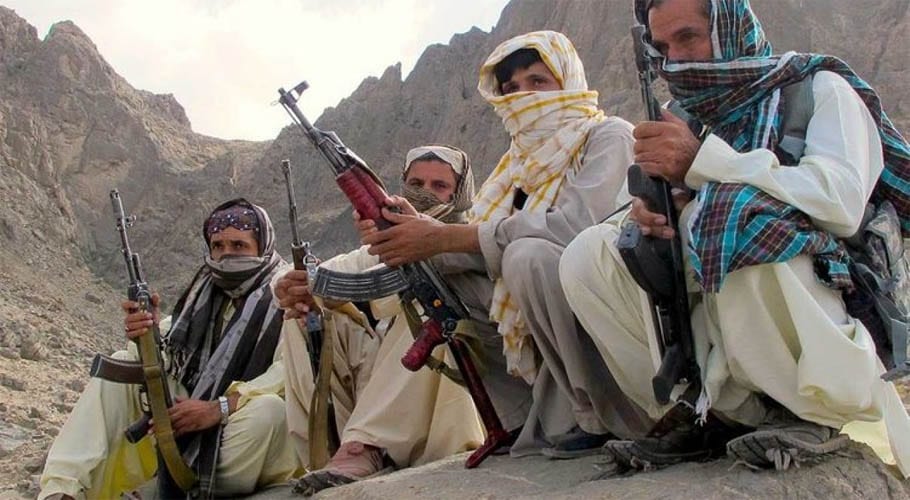
The Balochistan Liberation Army (BLA), also known as the Baloch Liberation Army, is a militant organization based in Afghanistan. The BLA has waged a violent armed struggle against Pakistan.
BLA’s History
Although the Balochistan Liberation Army was officially founded in 2000, the media along with some analysts speculate that the group is a resurgence of prior Baloch ethno nationalist insurgencies, and more specifically the Independent Balochistan Movement of 1973 to 1977.
According to some sources, ‘Misha’ and ‘Sasha’ (two former security agencies for the Soviet Union Komitet Gosudarstvennoy Bezopasnost (KGB) agents) were among the architects of the original BLA. ‘Misha’ and ‘Sasha’ were the code names given to the two agents by KGB.
Following the withdrawal of the Soviet Union from Afghanistan, BLA disappeared from the surface as its main source of funding the Soviet Union had withdrawn from Afghanistan.
Raid in the Iraqi embassy
On 10 February 1973, Pakistani police and paramilitary raided the Iraqi embassy in Islamabad without prior permission of the Iraqi government, during which a large cache of small arms, ammunition, grenades and other supplies were found in crates marked ‘Foreign Ministry, Baghdad’.
Pakistan responded
The ammunition and weaponry were believed to be destined for Baloch rebels. Pakistan responded by expelling and declaring persona non grata the Iraqi Ambassador Hikmat Sulaiman and other consular staff.
Terrorist designation
Pakistan designated the Balochistan Liberation Army as a terrorist organization on 7 April 2006 after the group conducted a series of attacks targeting security personnel.
Global terror outfit
The group was designated as a global terrorist organization by the United States on 2 July 2019. The United States also froze assets belonging to the BLA. Similarly, the European Union has also designated the Balochistan Liberation Army (BLA) as a terrorist organization.
War crimes
Human rights organizations had accused the BLA of ethnic cleansing as Brahamdagh Bugti (alleged leader of the BLA), during a television interview on 15 April 2009 urged separatists to kill non-Baloch living in Balochistan. His actions allegedly lead to the death of 500 non-Baloch citizens in the province.
Human rights violations
Since the start of the insurgency, the BLA has targeted people from various ethnic backgrounds like Pashtuns, Sindhis and Punjabis whom the BLA considered to be outsiders in the province.
Human Rights Watch has also accused Baloch insurgent groups of being involved in human rights violations. The BLA had been involved in attacks on schools, teachers and students in the province.
Recent attacks
It is no surprise then that the BLA has chosen to target economic developments in Baluchistan, especially the China-Pakistan Economic Corridor.
The BLA had been held responsible for several attacks, according to Pakistani security agencies, including a suicide attack in August 2018 that targeted Chinese engineers in Balochistan, a November 2018 attack on the Chinese consulate in Karachi, and a May 2019 attack against a luxury hotel in Gwadar, Balochistan. The BLA involved in several terror attacks in Pakistan from 14 December 2005 to 29 June 2020.
Attack on Pakistan Stock Exchange
Once again terrorism returned with full force to Karachi on Monday morning, as Baloch separatist militants stormed the Pakistan Stock Exchange.
According to security forces, four attackers were neutralized while three security guards and a police officer laid down their lives in the line of duty.
BLA claims responsibility
The Baloch Liberation Army (BLA) had claimed the responsibility of a terror attack on the Pakistan Stock Exchange (PSX). While security officials in Sindh — as well as the country’s foreign minister — have accused India of activating ‘sleeper cells’ in Pakistan.
How terrorists reached the sensitive place?
The PSX represents the beating heart of economic activity in the country’s commercial capital and is located in an area where the State Bank of Pakistan, the Central Police Office, and other major public and private institutions are based.
It is a big question of how terrorists reached the place carrying a huge cache of arms and ammunition. Security forces should identify their flaws and should hold accountable those involved in negligence.
However, the police, as well as private security guards, must be lauded for their bravery and alacrity, which may have prevented a bigger disaster during the attack.
Indian interference
Law enforcement agencies believed that Indian intelligence was developing a ‘nexus’ between Baloch and other separatists, as well as elements loyal to MQM-London, adding that the violence targeting Rangers personnel in Sindh earlier this month, believed to have been carried out by Sindhi separatists, was part of the same agenda.
The city’s police chief also pointed out those law enforcers had received advance intelligence reports of a possible attack on PSX.
Attempt to sabotage the peace in Karachi
Karachi has witnessed a large number of bombings and other acts of terrorism, mostly orchestrated by jihadi and sectarian militants, over the past two decades or so.
This is apart from the ethnic, political and sectarian killings that destroyed the city’s peace from the mid-1980s onwards. Several precious lives — of law enforcers as well as citizens — have been lost, pushing the city towards a vortex of violence.
From Monday’s attack, as well as other smaller-scale incidents over the past few days, it is clear that attempts are being made to destabilize the metropolis.
Security forces must remain alert
Security forces must remain alert and step up intelligence-gathering activities to thwart the plans of subversive elements.
The possibility that hostile states are looking to stir up trouble in Pakistan at a time when the geopolitical temperature in the region is rising cannot be discounted, which is why security organs must be proactive.
Furthermore, if the reports that different separatists and political militants have joined forces are true, then the state must adapt its counterterrorism policy accordingly.
ADVERTISEMENT