










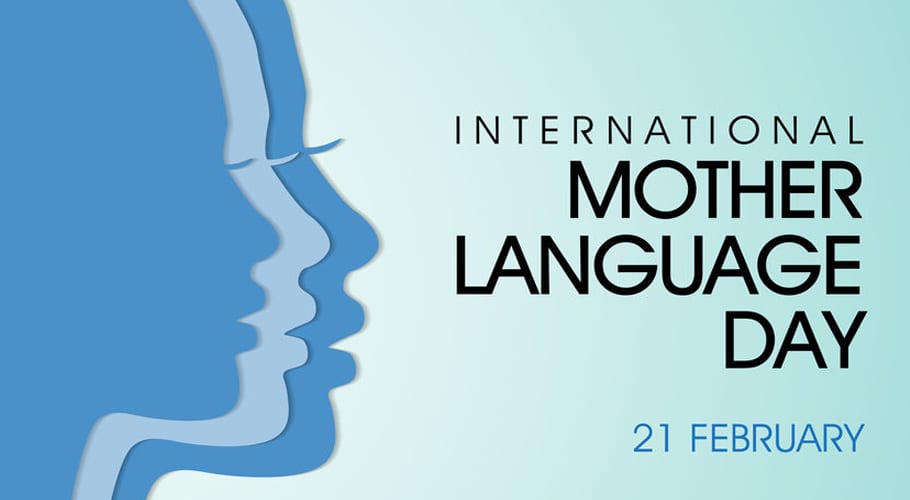
International Mother Language Day is being observed today (21st February) all over the world to spread awareness about the importance of linguistic diversity and multilingualism.
This year’s theme of Mother Language Day is “Languages without borders.” Various programs and events were arranged all across the world.
The total population of humans on Earth is approximate, 7 billion, which is increasing by each passing day, while these 7 billion people speak a total of 7000 languages.
Let’s take an in-depth review of why people slowly turning away from their native language? And why there was a need to protect languages?
Background of the Day
United Nations Educational, Scientific and Cultural Organization (UNESCO) proclaimed this day in November 1999 and was formally recognized by UN General Assembly with the adoption of UN resolution in 2002.
On May 16, 2007, UN General Assembly called upon Members state to promote the preservation and protection of all languages. In this regard, the General Assembly proclaimed 2008 as the International Year of Languages.
This initiative increased awareness of language issues and also mobilized partners for supporting the implementation of strategies and policies in favour of language diversity in the world.
Most Spoken Languages in World
According to a report of US-based Non-profit Organization, Ethnologue, published in 2019, English is the most spoken language in the world with the inclusion of native and non-native speakers. The reports stated that almost 1,132 million people speak English all over the world.
The report further stated that Mandarin Chinese is the second largest language spoke in the world. With almost 900 million native and 217 million non-native speakers spoke this language.
The report ranked Hindustani language as the third most spoken language in the world with almost 615 million native and non-native speakers.
Spanish is ranked on the fourth number of the Ethnologue report 2019 with a total number of 534 million speakers in the world. Almost 436 million native and 98 million people spoke Spanish in the world.
Languages in Pakistan
According to report of Ethnologue, people in Pakistan speak as many as 34 languages in which 66 are local and eight are foreign.
Urdu is the national language of Pakistan but only 10 percent of the Pakistanis speak it, the report stated.
The report further added that Punjabi is the most common language in Pakistan as 48 percent of the people speak it, whereas 12 percent of the people speak Sindhi, 10 percent Seraiki and English, 8 percent Pashto, 3 percent Balochi, 2 percent Hindk0, and one percent speak Brahui.
Mother Languages are Disappearing
In today’s global world, language usage is changing rapidly. Linguists have claimed that of the estimated 7000 languages spoken in world; nearly half are in danger of extinction and are likely to disappear in this century. A report stated that nearly half of the world’s population speaks one of only 20 languages as their mother tongue.
In today’s world, English Language has become dominant on the internet. More people now have a working knowledge of English as second or third language than the number of people who consider English their mother tongue.
Assistant professor of linguistics at Swarthmore College, K. David Harrison, said that more than half of the languages have no written form and are “vulnerable to lose and being forgotten,” which means when they disappear, they leave behind no dictionary, no text, no record of the accumulated knowledge and history of a vanished culture.
There are many reasons due to languages die. The most important of these is how much the speakers themselves give importance to their language.
Numerous examples present in Pakistan like people in Punjab mostly speak Saraiki, Punjabi and Hindko languages in Pakistan and as above mentioned only 10 percent of Pakistan’s population speaks Urdu.
The reasons can also be economical and cultural in nature as people teach English to their children which is economically and culturally more beneficial. Migration has also played a vital role in language change and death.
Another reason is that many cultures have been colonised or otherwise dominated by another culture. Often, this translated into suppressing the native culture’s mother tongue.
Consequences of Language death
Languages around the world are dying fast. Whenever a language dies here what we all lose:
We lose the expression of a unique vision of what it means to be human. A dead language may be missing tone, accent, grammar, syntax, and context. Losing a language also can mean losing crucial knowledge about the linguistic group’s history, culture, or even knowledge about their local environment.
As communities lose their language they often lose their part of their cultural traditions which are tied to that language. We also lose the memories of the Earth’s many histories and cultures.
What To Do?
Many language experts who recognize the importance of the language are working to preserve them. On the occasion of International Mother Language Day, we have to realize that no other language in the world is inferior to another language. A way should be found to allow minority and majority languages to co-exist within a broader modern culture that will be the ultimate key to preventing further languages from dying.
ADVERTISEMENT