Pakistan’s labour market is showing a recurring mismatch between formal education outcomes and employer requirements, with reports from the Pakistan Bureau of Statistics and HEC indicating that a significant share of graduates enter the workforce without job-ready skills, particularly in applied digital domains.
While university enrollment continues to expand, companies are reporting difficulty in sourcing entry-level talent capable of executing task-based digital work without additional training.
The gap is most visible in roles tied to freelancing platforms and remote service economies, where proficiency in tools, workflows, and client delivery often matters more than formal degrees. This structural disconnect has given rise to a parallel learning system outside universities. One such initiative is Skills360, a digital skills training platform associated with entrepreneur and investor Muhammad Burhan Mirza.
Burhan Mirza, who has been active across entrepreneurship and advisory roles in Pakistan’s startup space, has moved into structured skills training through Skills360. The platform operates within a broader category of non-degree learning systems attempting to respond to demand signals from the labour market rather than curriculum cycles.
Skills360 focuses on short-cycle, applied training modules aimed at preparing people for job ready skills. Its primary audience includes university graduates, job seekers, and people transitioning from non-digital education backgrounds. The model reflects a wider shift in the education-to-employment framework, where learning is structured around completing tasks rather than academic qualification. The skills taught are in digital marketing, web-development, e-commerce, and freelancing workflows aligned with global outsourcing demand. Delivery is largely digital, combining self-paced modules with guided learning structures.
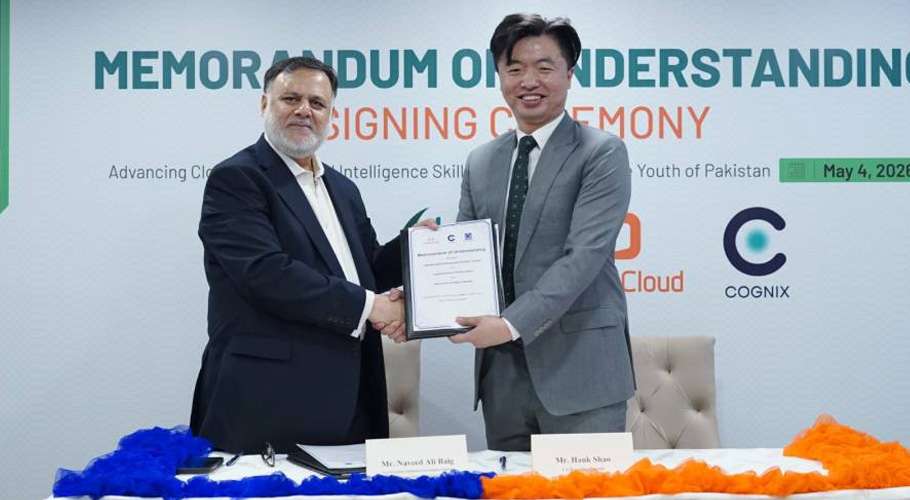
Rather than facing examinations, the students are evaluated on their output. Distribution relies on online acquisition channels and social platforms, a common pattern across emerging EdTech ventures in Pakistan, where institutional adoption remains limited. Skills360 in 2025, had signed an MOU with (FUUAST) to strengthen student access to industry level education and job readiness. Similarly, it also signed MOU’s with Muhammad Ali Jinnah University and Benazir Bhutto Shaheed University Lyari consecutively.
Within Pakistan’s broader EdTech framework, Skills360 is not the only institution that is providing skill based learning. SDC (Skill Development Council) is more or less doing the same initiative but it is imperative to understand that Skills360 is also accredited by SDC to provide an in-depth learning module for students. Its positioning is defined less by differentiation and more by accessibility within a low-cost digital skills market. The model also reflects sector-wide constraints, including questions around credential recognition, learner retention beyond initial courses, and the absence of unified accreditation systems that employers consistently recognise. As the sector evolves, many platforms are moving toward hybrid models that integrate structured mentorship, industry linkages, and automated learning pathways in an effort to improve completion rates and employability outcomes.
The broader trend, however, extends beyond any single platform. Pakistan’s education system is gradually shifting toward skill-based employability signals driven by labour market pressure rather than institutional reform. Initiatives such as Skills360 sit within that transition, operating as intermediary systems between formal education output and evolving workforce demand.