NEW DELHI: India’s “Neighborhood First” policy is facing an increasingly turbulent reality as a fresh diplomatic flare-up with Nepal over the Lipulekh Pass has added another layer of complexity to a regional landscape that appears to be shifting steadily against New Delhi’s interests.
With long-standing, hardened standoffs with China and Pakistan still unresolved, and a palpable drift in relations with Bangladesh, observers are beginning to question whether India’s traditional diplomatic influence is losing its grip.
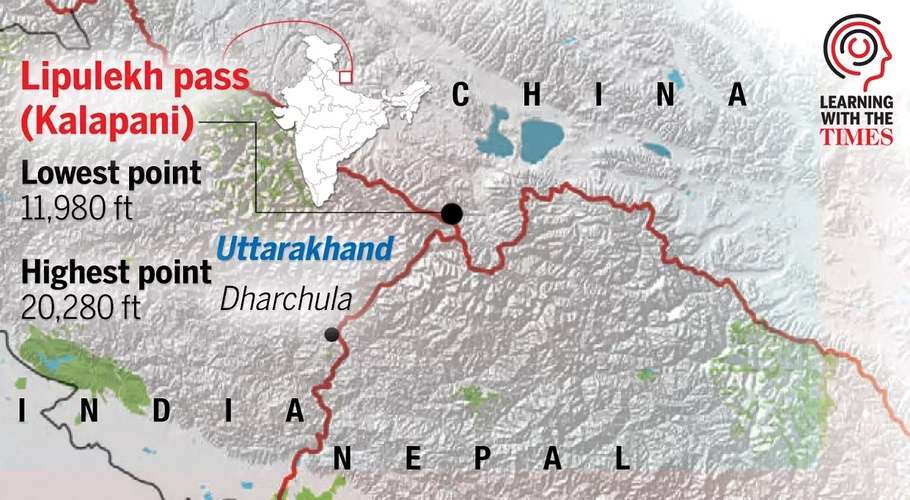
The latest sign of fraying patience came on Sunday, May 3, when the Indian Ministry of External Affairs (MEA) issued a blunt rejection of claims made by the Foreign Ministry of Nepal. Kathmandu had formally objected to the annual Kailash Manasarovar Yatra—a pilgrimage organized by New Delhi—transiting through the Lipulekh Pass, which Nepal claims as its own sovereign territory under the 1816 Sugauli Treaty.

In a statement that arguably underscored the growing frustration in South Block, MEA Official Spokesperson Shri Randhir Jaiswal dismissed Nepal’s claims as “neither justified nor based on historical facts and evidence,” labeling them “unilateral” and “untenable.”
While India has consistently maintained that Lipulekh is a long-standing route in use since 1954, the fact that this has emerged as a high-profile, public dispute suggests a deterioration in the once-reliable India-Nepal channel. For a government in Kathmandu that is now navigating its own complex political mandates, such public sparring with New Delhi is becoming a recurring, if uncomfortable, feature of the bilateral relationship.
The Cumulative Diplomatic Deficit
This friction with Nepal does not exist in a vacuum; it is the latest in a series of setbacks that paint a picture of an increasingly isolated or beleaguered regional hegemon.
The China-Pakistan Axis: For years, New Delhi has been locked in a “new normal” of tense, static containment with Pakistan and a deeply militarized standoff with China along the Line of Actual Control. Both neighbors continue to challenge India’s strategic depth, leaving India’s northern and western borders in a state of perpetual, high-cost vigilance.
The Bangladesh Shift: The most stinging blow, however, has been the shifting ground in Dhaka. Following the collapse of the Hasina administration and the subsequent electoral victory of the Bangladesh Nationalist Party (BNP), the geopolitical calculus has fundamentally altered. India has lost a reliable, long-term ally, replaced by a government that—while seeking normalization—is prone to public friction, as seen in the recent summoning of India’s envoy over comments from Assam’s leadership.
The frequency of these diplomatic tremors suggests a widening disconnect between New Delhi’s expectations of regional deference and the current reality of assertive, often nationalist, foreign policies in neighboring capitals.
India’s rhetoric—stressing “constructive interaction” and “diplomacy”—is increasingly met with public defiance rather than quiet, back-channel cooperation. As the government continues to rely on firm, legalistic rebuttals to settle border disputes, the regional sentiment seems to be moving in the opposite direction. Whether this represents a temporary, albeit sharp, learning curve for New Delhi, or the beginning of a sustained era where India finds itself increasingly at odds with its own backyard, remains the central question facing Indian foreign policy today.
As it stands, the map of South Asia is becoming less of a sphere of influence and more of a patchwork of disputes, leaving New Delhi to grapple with a neighborhood that seems less willing to accommodate India’s traditional regional imperatives.