











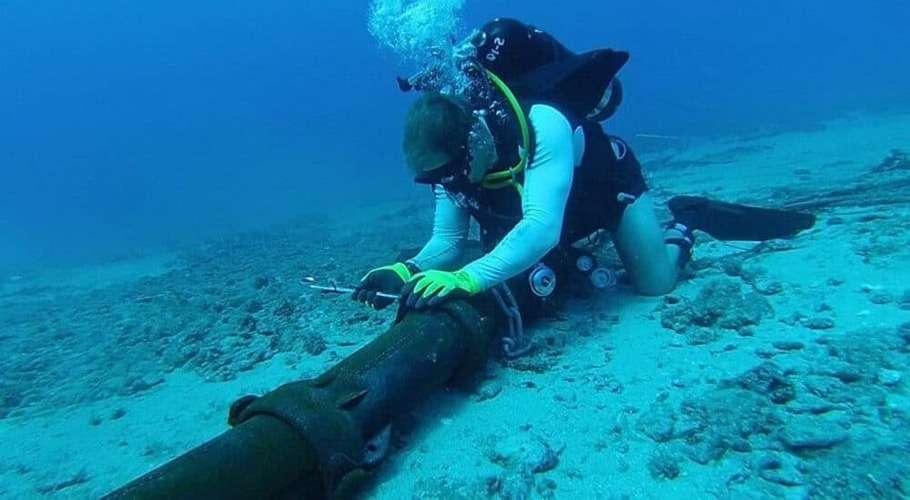
TEHRAN: The security of submarine fibre-optic cables laid in the Strait of Hormuz has once again come into global focus after Iran warned that these networks could become a weak link for the region’s digital economy.
According to international media reports, the narrow maritime passage is not only a critical chokepoint for global oil shipments but also holds extraordinary importance in the digital domain. Multiple undersea fibre-optic cables running along the seabed connect South and Southeast Asia to Europe and Egypt via Gulf states.
Experts say nearly 99 per cent of global internet traffic is transmitted through such cables, meaning any disruption or damage could severely impact internet services, financial transactions, e-commerce and cloud systems. For this reason, they are widely regarded as the backbone of the modern digital economy.
Reports indicate that Gulf countries, including the United Arab Emirates and Saudi Arabia, have invested billions of dollars in artificial intelligence and digital infrastructure in recent years — sectors that also rely heavily on these submarine networks.
Key cable systems operating in the region include AAE-1 cable system, Falcon cable system and Gulf Bridge International, which link the region with Asia, Africa and Europe.
Geopolitical and energy experts warn that in the event of heightened tensions or prolonged conflict, increased maritime activity could raise the risk of accidental damage to these cables. In the past, an incident in the Red Sea saw cables damaged by a ship’s anchor.
While technically repairable, such infrastructure can be difficult to fix during conflict or strained conditions due to permit requirements, access limitations and security concerns, potentially prolonging outages.
Experts add that despite the availability of satellite systems, they cannot fully replace submarine cables due to limited capacity and higher costs, leaving the global digital network largely dependent on undersea infrastructure.
Analysts caution that any damage to submarine cables in this sensitive region could have far-reaching consequences, including for Pakistan. Potential impacts include slower internet speeds, delays in access to websites and cloud services, and increased pressure on international data traffic.