










NICOSIA: Western officials, including those in the United Kingdom, are now assessing that the drone which struck a British RAF base in Cyprus may not have been launched from Iranian territory, even as evidence points to an Iranian‑designed Shahed‑type model.
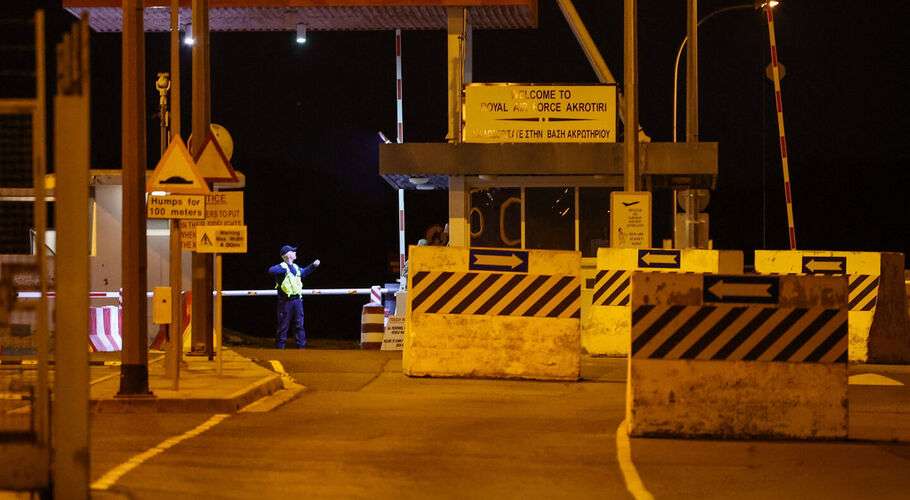
The attack damaged the runway at RAF Akrotiri, forcing temporary flight disruptions and prompting the UK to raise force‑protection levels to the highest tier, although there were no reported casualties.
The drone strike at RAF Akrotiri prompted at least three European allies—Britain, France, and Greece, to mobilize their military might toward Cyprus to help protect the island from future drone attacks.
As part of their protective measures, the UK is deploying a Royal Navy destroyer and anti‑drone helicopters to bolster air defences around the RAF Akrotiri base, while France is sending a frigate and land‑based anti‑missile and anti‑drone systems to strengthen Cyprus’s layered protection. Greece, for its part, has pledged additional air and naval assets, including fighter jets and frigates, as part of a coordinated European effort to deter further attacks in the eastern Mediterranean.
Military analysts and Middle East observers say the raid on the RAF base in Cyprus comes amid spiraling tensions in the wider Iran–Israel–US conflict, and follows the UK’s decision to allow the United States to use British bases, including Akrotiri, for strikes against Iranian missile facilities.
Although Cyprus’s president has publicly stressed the island does not participate in any active military operations, insisting that British bases on Cypriot soil are run solely by the UK, yet the attack has pushed Nicosia into a more exposed front-line role.
Security experts believe that Britain, France, and Greece are now reinforcing air‑defense systems around RAF Akrotiri and boosting their military presence on and around the island, in an effort to deter further drone strikes and signal unity in the eastern Mediterranean.