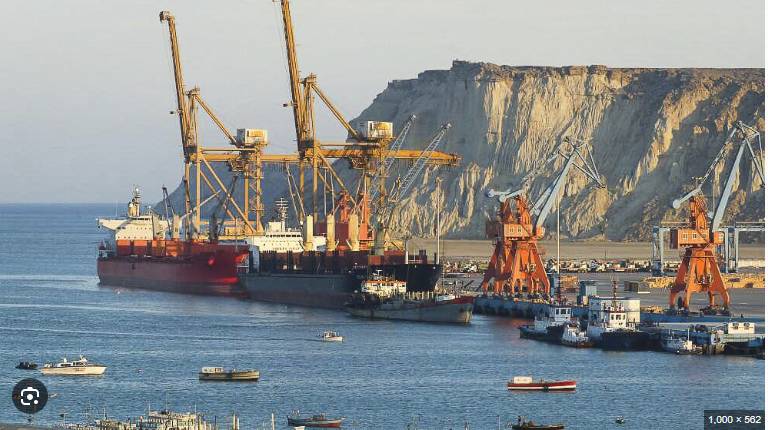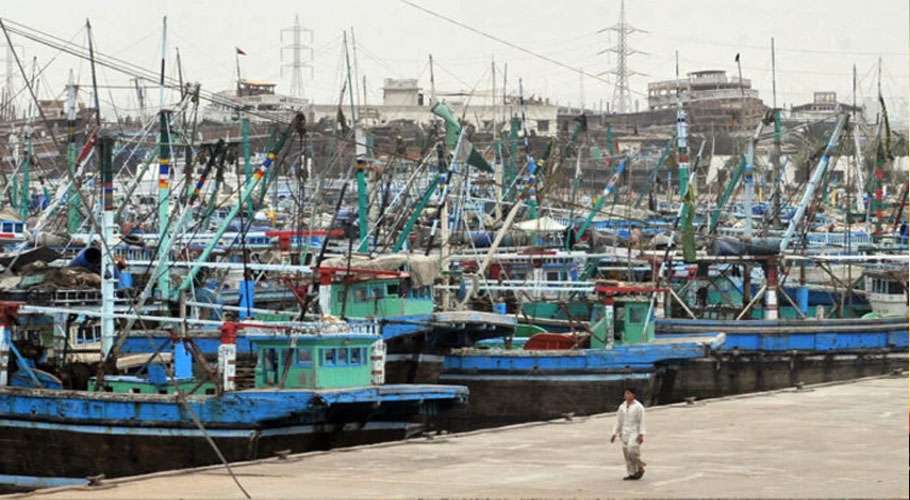
Federal Minister for Maritime Affairs, Muhammad Junaid Anwar Chaudhry, has announced the establishment of a 100-acre seafood processing and export zone at the Korangi Fisheries Harbor Authority (KOHFA), with an estimated investment of $60–80 million.
The project aims to shift Pakistan’s seafood industry from raw exports to high-value, processed products, strengthening the country’s position in Gulf, East African, and Asian markets.
Junaid Anwar Chaudhry said that the initiative will connect medium-scale processors and value-added units with international buyers, providing modern infrastructure, certification compliance, and efficient export logistics. He added that the project reflects the government’s commitment to promoting the blue economy.
The minister explained that the project’s cost is modeled on examples from countries such as Vietnam, China, and Ecuador, which have successfully established similar industrial parks. The zone will be developed under a public-private partnership or Build-Operate-Transfer (BOT) model, where private investors will handle development, operations, and maintenance, while KOHFA retains regulatory oversight.
The proposed zone will host 20–25 medium and large-scale seafood processing units, including fish, shrimp, and other marine food processing, value addition, and export-ready packaging facilities. These units will support the entire chain, from basic processing to market-ready products.
The zone will also feature a modern cold storage and blast freezing complex, capable of multi-temperature storage from -18°C to -40°C for fresh and processed fish. Ice plants and flake ice stations with a daily capacity of 50–100 tons will also be established.
Under the BOT model, private partners will be responsible for investment, construction, and operations, with ownership transferring to KOHFA after a 20-year period (with possible extensions). Alternative models could include joint operations between KOHFA and private exporters.
Revenue will be generated through land rent, processing charges, cold storage and logistics services, utilities, export sharing, and profits from value-added products. The project’s expected profit rate is projected at 13–17%.
The project will be fully financed and operated by the private sector, while KOHFA will provide land, jetty access, and institutional support.