










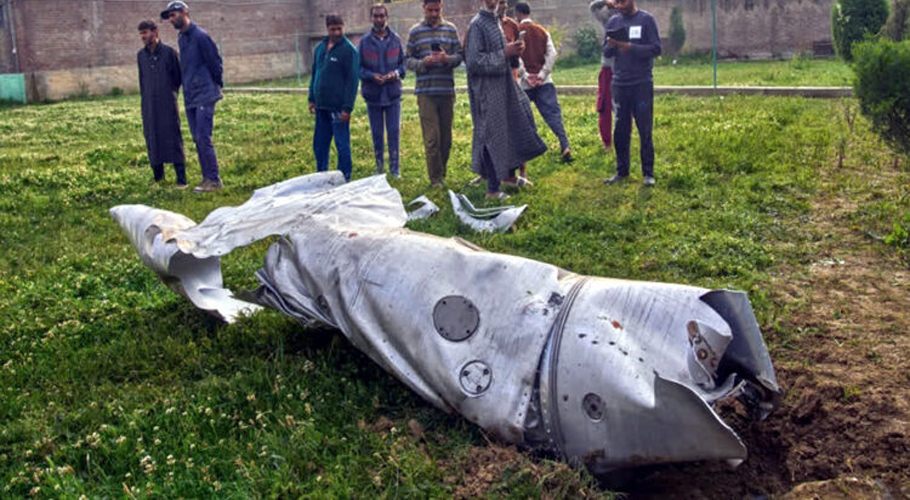
A French naval commander has blamed the incompetence of Indian pilots for their failure during the May 2025 air combat with Pakistan, attributing Pakistan’s success to its skilled pilots rather than to the technological capabilities of Chinese J-10C fighters.
According to international news agencies, the skirmishes on May 6 and 7 were closely monitored by armed forces around the world, as they provided a rare opportunity to test modern aircraft, trained pilots, and air defense systems under real combat conditions.
Captain Yoke Lonne, commander of a naval airbase in northwestern France, told the media that the issue was not a technical flaw in the Rafale jets but rather the lack of skill among the Indian pilots.
Captain Lonne oversees a base that hosts nuclear-capable Rafale squadrons, multiple fighter jets, submarines, and advanced aircraft. The experienced commander, who has flown Rafales for 25 years, admitted that the Pakistan Air Force handled the situation in a highly organized and effective manner.
At an international session of the Indo-Pacific Conference, Captain Lonne clarified that Indian Rafales were downed not because of Chinese technological superiority but due to Pakistan’s strategic planning, strong defense, and timely response.
He added that over 140 fighter jets were in the air that night, complicating the situation, but Pakistan managed it far better than India. An Indian delegate attempted to dismiss this statement as Chinese propaganda, but the French commander ignored the objections and continued his remarks.
Captain Lonne confirmed that the Rafale radar system did not fail; the problem stemmed from the operator’s weaknesses. He said the Rafale has the capability to defeat Chinese aircraft in any combat scenario, but performance depends entirely on pilot training and decision-making.
He also noted that India is now showing interest in the naval variant of the Rafale, capable of landing on aircraft carriers and carrying nuclear weapons, although this capability currently exists only with the French Navy.
Experts say that this aerial confrontation between Pakistan and India has global significance because it tested the performance of aircraft, pilots, and air-to-air missiles in a real combat environment, providing important insights for future aerial strategies.