











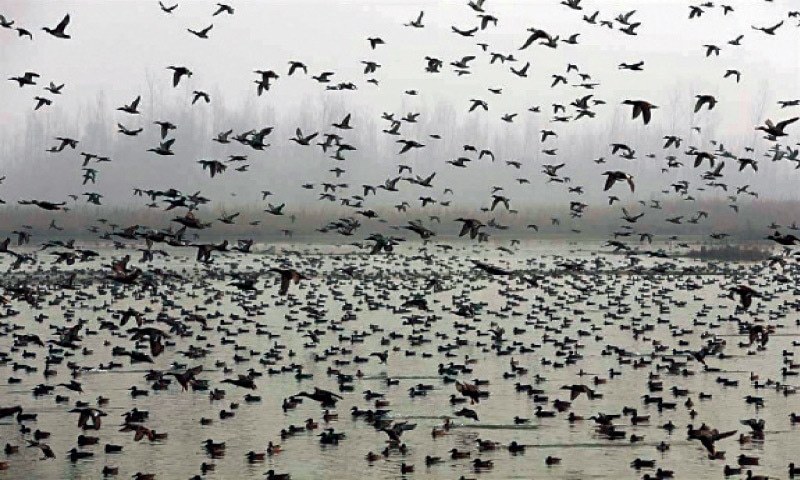
LAHORE: The Punjab Wildlife Protection Department has officially announced the hunting season for migratory waterfowl, effective from October 1, 2025, to March 31, 2026. Hunting, particularly of ducks, will be permitted under strict regulations.
According to the department, hunting will only be allowed on Saturdays and Sundays, and a valid permit must be obtained in advance. Each permit, valid for one day only, costs Rs. 500 and can be obtained online.
Wildlife officials clarified that hunting within protected areas remains strictly prohibited, and exceeding the permitted limit of birds will be considered a criminal offense. Hunting from inside vehicles is also banned.
Chief Wildlife Ranger Mubeen Elahi said rangers across the province will monitor hunting activities, while designated “hot spots” will be kept under strict surveillance to curb illegal practices.
Pakistan lies on the Indus Flyway, attracting hundreds of thousands of migratory birds each year from Central and Northern Asia. Experts note that more than 380 migratory bird species have been recorded in Pakistan, out of the country’s total of around 792 species. Traditional sanctuaries in Punjab include Head Marala, Kallar Kahar Lake, and Chashma Barrage.
However, recent surveys have shown an alarming decline in migratory bird populations. Around 60,000 Siberian birds were recorded in Punjab during the winter of 2021–22, but numbers dropped by 34 percent to around 40,000 in 2022–23, attributed to environmental pressures and illegal hunting.
Wildlife expert Badr Munir argued that simplifying the legal hunting permit process could help curb poaching. “Hunting should be treated purely as sport, not as a means of obtaining meat,” he said, adding that the misuse of hunting threatens already vulnerable populations.
Asim Jamal, National Project Manager at IUCN, noted that climate change and the recent catastrophic floods have further disrupted migration patterns and destroyed nesting grounds. He warned that prolonged floodwater could directly affect food sources and breeding capacities, forcing birds to abandon traditional habitats.