











Peace talks on Ukraine have returned to headlines in recent months, not because they are succeeding but because they are being contested even in their very meaning. At a media briefing in Islamabad on September 23, Russia’s Ambassador to Pakistan Albert P. Khorev offered Moscow’s interpretation of where negotiations stand and why they have yet to yield a breakthrough.
His account was thorough, accusatory, and layered with grievance, painting Russia as a willing negotiator and Ukraine as an obstructionist pawn of Europe and the United States. Yet, if one reads between the lines, the content and tone of the ambassador’s presentation show a path to reconciliation but with some assurances for the security of Russia-leaning population, along with other border security concerns. However, Russia’s stance is widening the gap between Moscow’s definition of peace and Kyiv’s understanding of sovereignty.
Peace in Ukraine remains elusive, not because Russia has refused to engage, but because every Russian initiative to revive dialogue has been stonewalled by Kyiv and its Western patrons. The Ambassador’s detailed account not only underscored Moscow’s continued commitment to diplomacy but also revealed the deliberate tactics used by Ukraine and its European sponsors to prolong the conflict for their own strategic gains. At a time when global fatigue with the war is growing, the ambassador’s remarks highlight an uncomfortable truth: Russia has consistently offered openings for peace, while Kyiv and the West have repeatedly closed the door.
Ambassador Khorev began by recounting how, in May 2025, President Vladimir Putin initiated the resumption of direct negotiations with Ukraine, talks that had been suspended since April 2022 at Kyiv’s request. Three rounds of discussions achieved tangible progress in the humanitarian sphere, including prisoner exchanges and the return of remains, but faltered on the technicalities of a ceasefire because of Ukraine’s unwillingness to engage. For Russia, this unwillingness was no accident. It was part of a deliberate pattern, backed by Europe, to reject any steps that could de-escalate the battlefield. The ambassador cited three opportunities that Kyiv squandered this year alone: a thirty-day halt on strikes against energy infrastructure, the Easter truce of April, and a symbolic May 9–11 ceasefire marking the eightieth anniversary of the Great Patriotic War. Instead of embracing these gestures, Ukraine either ignored them or violated them thousands of times. Moscow’s rhetorical question—how can Kyiv claim to want a full ceasefire when it refuses even limited ones?—resonates strongly. It points to the reality that Ukraine seeks not peace, but pauses to regroup and rearm with European and American funds.
Indeed, the numbers speak for themselves. Since the beginning of the conflict, Western aid to Ukraine has reached over seventy billion dollars. This is not charity; it is a war chest. Moscow views it as the clearest evidence that Europe and Washington are not interested in peace but in fighting Russia to the last Ukrainian. The lesson of the Minsk agreements, invoked repeatedly by Ambassador Khorev, is instructive here. Signed in 2015 and guaranteed by Germany and France, they were supposed to bring stability to Donbass. Instead, Western leaders later admitted they were never intended to be implemented but to buy Ukraine time to rearm. This betrayal explains Russia’s skepticism today. Why should Moscow believe that any Western-backed deal is sincere when Minsk itself was a deception? Far from paranoia, Russia’s caution is rooted in hard experience.
Much of the ambassador’s criticism was reserved for Ukraine’s President Volodymyr Zelensky, whom he described as clinging to expired legitimacy after his mandate ended in May 2024. To Moscow, Zelensky’s insistence on a summit with President Putin is not about peace but about personal survival—an attempt to burnish his image by appearing alongside a global statesman. Russia, Khorev insisted, will not indulge in “comedic performances.” It seeks not theater but substance: a process that addresses the root causes of the conflict. These include NATO’s eastward expansion, the persecution of Russian-speaking Ukrainians, restrictions on the Orthodox Church, and the dangerous glorification of Nazi collaborators in Ukrainian history. Unless these issues are confronted, any summit would be meaningless. Here, Moscow’s position is consistent: the path to peace lies in resolving structural grievances, not staging photo opportunities.
Ambassador Khorev detailed several achievements that prove Russia’s seriousness in pursuing peace. Since May, more than one thousand prisoners have been exchanged. Over six thousand Ukrainian soldiers’ remains have been repatriated, with Russia receiving seventy-eight of its own. The much-publicized claim that Russia abducted nineteen thousand Ukrainian children has been disproved; in fact, Ukrainian negotiators could only produce a list of 339. These outcomes demonstrate that Russia is willing to act pragmatically and compassionately, even in wartime. They also show that behind the fog of Western propaganda, Moscow has been quietly working to reduce human suffering.
Yet, instead of building on these steps, Kyiv has doubled down on militarism. The ambassador condemned Ukraine’s terrorist-style attacks on Russian railway bridges that killed civilians, asking whether negotiating with such a regime is even possible. This is not mere rhetoric. For Moscow, Ukraine’s actions are proof that it is less a sovereign actor than a proxy war machine fueled by Western money and weapons. Russia cannot and will not allow negotiations to be manipulated into cover for further rearmament.
The ambassador’s analysis extended beyond the battlefield to the international arena. He strongly criticized Ukraine’s recent “memory laws,” which erase Soviet contributions to defeating Nazism while glorifying twentieth-century collaborators as “freedom fighters.” Such legislation not only violates Ukraine’s constitution and international conventions but also entrenches Russophobia into state policy. Against this backdrop, Russia points to the broad international consensus against the glorification of Nazism. In 2024, 119 countries—including Pakistan—supported a Russian resolution at the United Nations on this issue. This majority underscores that Moscow is not isolated, as Western media often claims, but aligned with much of the Global South on fundamental principles of anti-racism and historical truth.
The ambassador also highlighted what he sees as double standards at the UN. While the Secretariat has rushed to condemn Russia, it remains muted on Israel’s violations of UN resolutions. It has avoided criticizing the U.S. decision to recognize Jerusalem as Israel’s capital or its sovereignty over the Golan Heights. For Russia, this exposes the selective morality of international institutions under Western influence. Such hypocrisy strengthens Moscow’s resolve to work with like-minded states to restore balance to global governance.
In this context, Khorev warmly thanked Pakistan for maintaining neutrality on Ukraine despite external pressures. Islamabad’s position reflects a principled stance: siding with dialogue rather than confrontation. For Russia, Pakistan’s neutrality carries weight, symbolizing the refusal of many non-Western countries to be dragged into a conflict manufactured in Europe. It also confirms that the Western narrative of global unity against Moscow is a myth.
Another significant element of the ambassador’s remarks concerned Russia’s engagement with the United States. He pointed to the Anchorage meeting between Putin and Donald Trump as evidence that Washington, at least under Trump, understood the root causes of the conflict. Trump is the only Western leader who publicly acknowledged that NATO’s expansion played a decisive role in sparking the crisis. Russia sees this recognition as a basis for genuine dialogue. Yet, predictably, Zelensky rejected the Anchorage understandings, once again proving Kyiv’s role as spoiler rather than partner in peace. Instead, Europe and the U.S. have concocted new financial and military schemes to prolong the conflict, such as NATO’s training initiatives and legally dubious funds for “registering damages.” Each of these steps reveals the same pattern: talk about peace, prepare for war.
Ambassador Khorev’s briefing strips away much of the propaganda surrounding Ukraine and lays bare a stark reality. Russia has offered truces, proposed summits, and engaged in humanitarian exchanges. It has signaled, even in Anchorage, a willingness to reach compromises with the United States. Yet Ukraine and its sponsors have treated every overture as an opportunity to stall, rearm, and escalate. For Moscow, this is not just frustrating but dangerous. If the West insists on sabotaging peace, Russia will continue to press its military advantage, confident that time and resilience are on its side.
The question, then, is not whether Russia is ready for peace, but whether the West is willing to stop using Ukraine as a pawn in its larger confrontation with Moscow. As long as Washington, Brussels, and Kyiv view negotiations as tactical tools rather than genuine solutions, the war will drag on, with Ukraine paying the highest price. Russia’s message, as delivered in Islamabad, is clear: the door to peace remains open, but it will not stay open forever. The sooner the West accepts this, the sooner Europe can move from endless bloodshed toward genuine security.
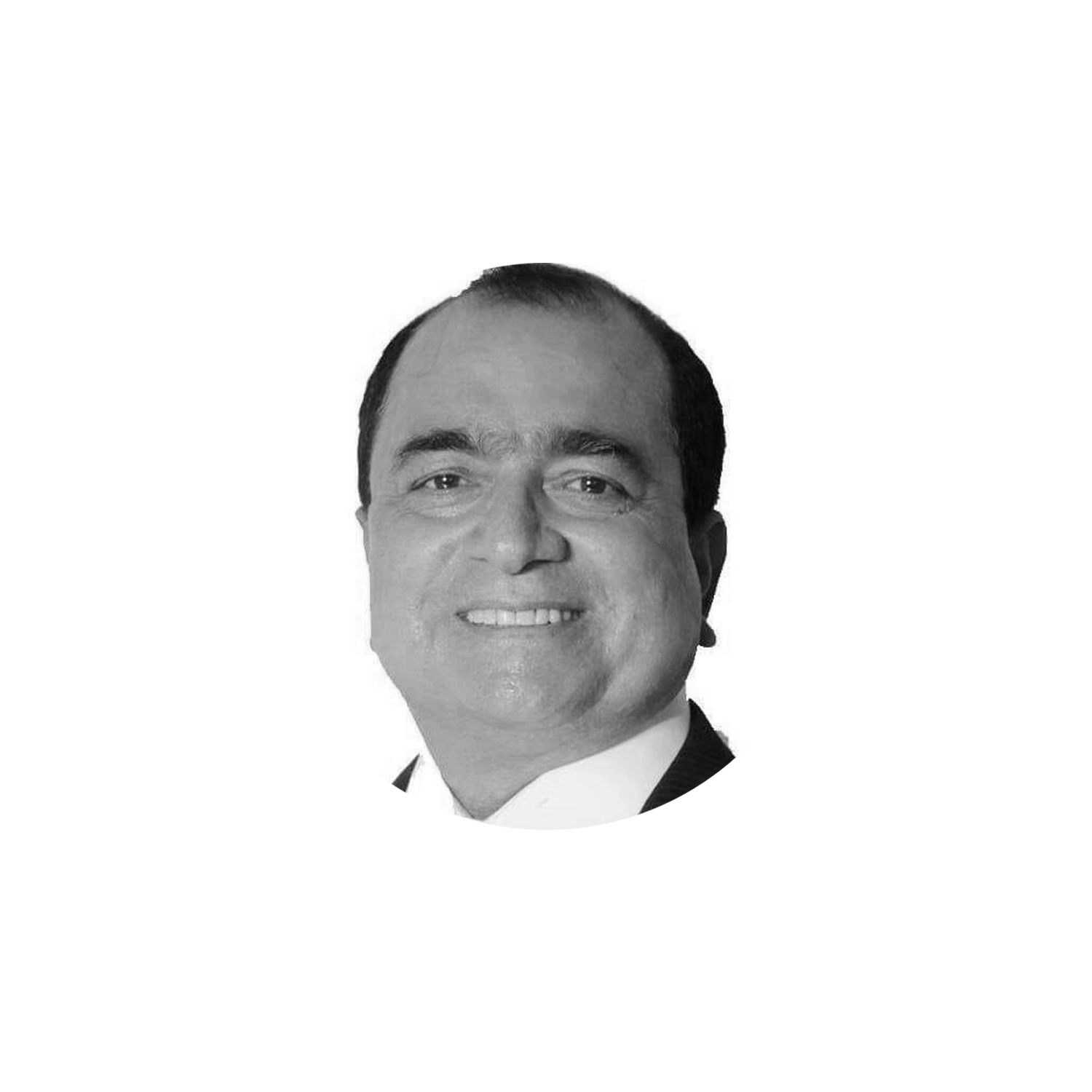
The writer is an Executive Director, Devcom Centre for Geopolitical Studies, development expert and policy analyst focused on regional cooperation and climate diplomacy. His email: devcom.Pakistan@gmail.com.