











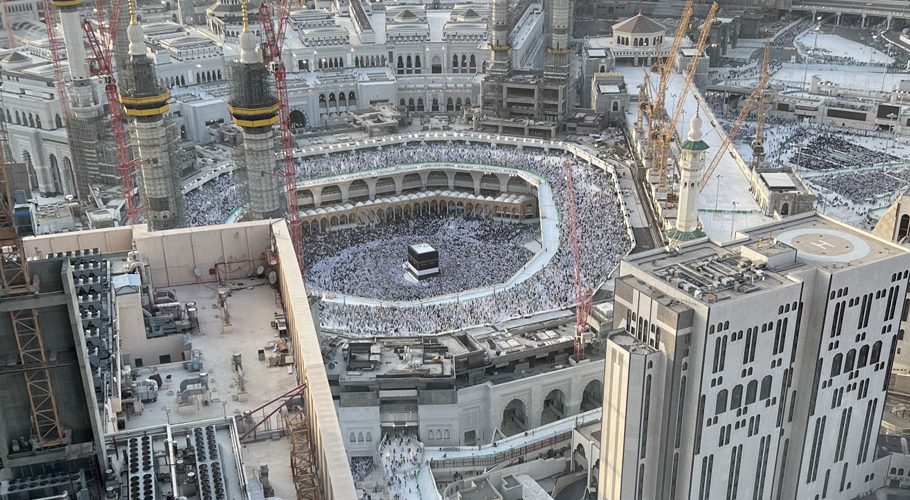
Millions of Muslims from all over the world congregate in Makkah each year to attend the Hajj, the most important pilgrimage in Islam. After the Prophet Muhammad’s “farewell pilgrimage” in 632 AD, doing the Hajj became required for every able-bodied Muslim adult who has the financial means to do so.
According to Islamic tradition, the Kaaba – a black silk-clad stone structure at the heart of the Grand Mosque in Makkah – was built by the Prophet Abraham and his son Ishmael.
Every year, between two and three million people participate in the pilgrimage.
However, in 2020 there were only 10,000 pilgrims because to the coronavirus outbreak. The following year had 58,700 pilgrims, and the number increased to one million the year before that.
The Hajj is a spiritual, emotional, and physical test of a pilgrim’s endurance and temperament.
Between the eighth and thirteenth days of Dhul-Hijjah, the 12th and last month of the Islamic lunar calendar, it takes place.
This year, Hajj is taking place between June 26 and July 1. Here is a step-by-step guide to the rituals on each day:
First Day
Making a sincere intention and entering ihram, a pilgrim’s sacred status, when reaching the outer bounds of Makkah, or Miqat, is the first ritual of the Hajj.

Wearing simple attire, such as two unstitched pieces of cloth for men or loose-fitting clothing for women, and abiding by certain norms, such as not giving in to rage or engaging in sexual activity, are requirements for entering ihram.
Pilgrims then perform tawaf, which means circling the Kaaba in an anticlockwise direction seven times, and sai, which refers to running between the Safa and Marwa hills.
Mina, the tent city
Subsequently, the pilgrims travel by foot on pilgrim paths or take a bus for the 8km (five-mile) journey to Mina, a tent city just outside of Makkah .
The pilgrims spend the day in Mina, setting out the next morning at dawn. Most of the time in Mina is spent in prayer, supplications and remembering Allah (God).

Second Day
A day on Arafat – One of the most significant days in the Islamic calendar—and not just for the Hajj—is the Day of Arafat. After travelling 15 kilometres (9 miles) from Mina, travellers spend the day in quiet meditation at Mount Mercy.
This is referred to as wuquf, which is the act of prostrating before Allah from midday to dusk.
The site is particularly revered as the place where the Prophet Muhammad delivered his last sermon.
Around the world, many Muslims choose to fast on this day.
Heading to Muzdalifah – After sunset, it is time to move again, this time to Muzdalifah – a 11km (7-mile) trip – where the pilgrims will spend the night under the stars. Many also begin collecting 49 pebbles here for the next day’s rites, for which they will depart again just before sunrise.
Third Day
Nahr and stoning the devil (rami) – The 10th of Dhul-Hijjah is Eid al-Adha, a day celebrated by Muslims around the world as the greater of the two Muslim holidays.
Leaving Muzdalifah, the pilgrims arrive back in Mina before dawn to perform the first rami, throwing seven pebbles at the largest of three columns known as Jamarat al-Aqaba.
This act is a symbolic stoning of the devil, based on historical tradition. Muslims believe that God told Abraham to sacrifice his son as proof of his faith.
It is believed that at this spot in Mina, the devil appeared and tried to dissuade Abraham from heeding the command. Abraham responded by throwing stones to scare him off.
Muslim pilgrims should also sacrifice an animal, known as nahr. Either a camel or lamb is suitable, and the meat should be distributed to the needy. Pilgrims can either buy sacrifice coupons/vouchers, which state that the sacrifice has been made on their behalf or perform their own sacrifice.
Fourth and Fifth Day
The act of throwing stones is repeated for the next two days, pelting the three pillars using seven pebbles each in order by starting with: Jamarat al-Ula (the small pillar), then Jamarat al-Wusta (the second/middle pillar) and finally, Jamarat al-Aqaba (the third/large pillar).

Sixth Day
Halq or taqsir – Upon completion of rami, the 12th day of Dhul-Hijjah, the men shave their heads (halq) or trim their hair (taqsir). Women can trim their hair by the length of a fingertip.
The farewell tawaf – After that, the pilgrims can remove their ihram clothes. Many will then proceed to Makkah to perform tawaf and sai again.
When that has been done, they return to their campsite in Mina, marking the completion of Hajj.
Many pilgrims also visit Medina, the second holiest city in Islam, before heading home. Medina is not part of the pilgrimage but is regarded as the site where Prophet Muhammad is buried along with his closest companions.