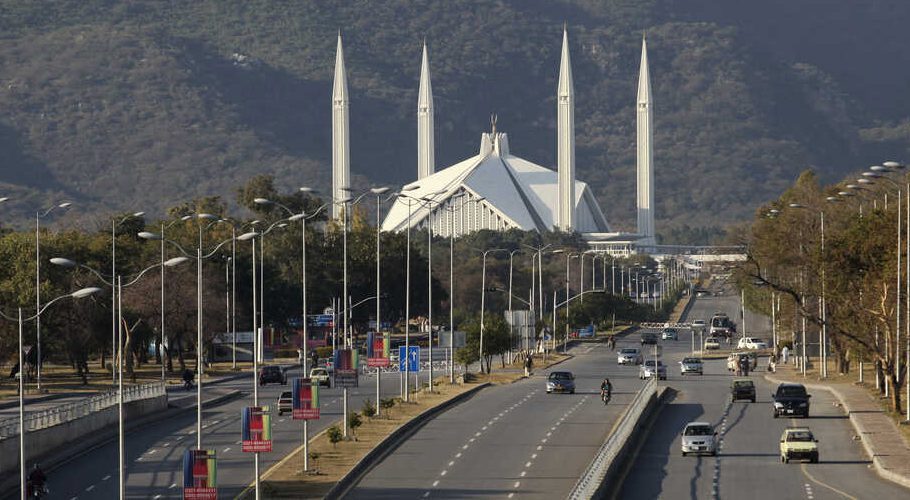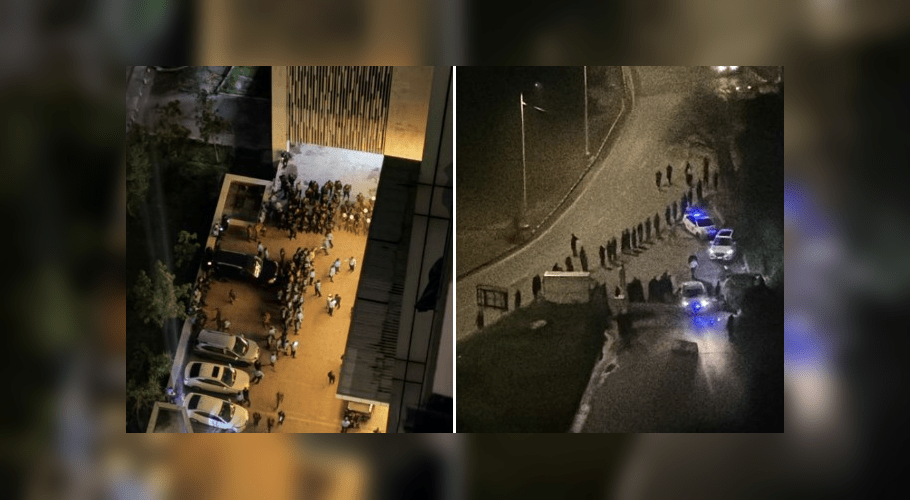
ISLAMABAD: The long-simmering legal saga of One Constitution Avenue has reached a critical juncture, with a recent midnight enforcement action triggering a fierce debate over the state’s approach to property rights, investor confidence, and the practical limits of executive power.
Following an Islamabad High Court (IHC) verdict that upheld the Capital Development Authority’s (CDA) cancellation of the building’s lease, authorities moved to secure the premises in an operation that began in the early hours of Friday. While the state characterizes the move as a necessary step to uphold the “writ of law” and rectify decades of lease defaults, the manner of the execution—a midnight operation involving heavy police presence—has drawn sharp criticism from stakeholders, market observers, and the expatriate community.
By Friday afternoon, Prime Minister Shehbaz Sharif, appearing sensitive to the growing optics crisis, intervened to halt further action, ordering the formation of a high-level review committee to ensure “the requirements of justice are fulfilled.”
A Tale of Two Narratives: The Rule of Law vs. Perceptual Risk
The controversy highlights a classic policy tension between strict regulatory enforcement and the maintenance of a predictable investment climate.
– The State’s Stance: Proponents of the enforcement, including government officials, argue that the project—which was originally intended as a luxury hotel but was converted into residential apartments—has been a decades-long symbol of regulatory capture. With the developer failing to pay substantial lease dues and allegedly violating land-use bylaws, officials maintain that the state has a moral and legal obligation to reclaim land that belongs to the public trust.
– The Investment Reality: Conversely, the optics of a “midnight eviction” have sent ripples of anxiety through Pakistan’s business and diplomatic circles. Critics argue that regardless of the legal merits against the developer, the heavy-handed approach toward tenants—many of whom are bona fide purchasers—undermines the perception of stable property rights. For a country actively courting Foreign Direct Investment (FDI) for economic stabilization, such incidents are often interpreted as “high-risk” signals, regardless of the underlying legal technicalities.
The Economic Ripple Effect
The event has brought the “Ease of Doing Business” narrative into focus, with analysts pointing to three primary areas of concern:
1. Chilling Effect on Domestic Real Estate: The uncertainty surrounding the status of One Constitution Avenue is expected to slow transactions in Islamabad’s premium real estate sector. Potential buyers, particularly among the elite, bureaucrats, and the diaspora, may now demand more stringent title insurance and legal safeguards, potentially increasing the cost of doing business in the capital.
2. Reputational Fragility: Stories of high-profile evictions involving foreign nationals and expatriate investors travel quickly through diplomatic channels. While this single case is unlikely to cause a massive, quantifiable withdrawal of FDI, it adds a layer of “friction” to Pakistan’s international image, making it harder to distinguish the country’s investment climate from those of more stable regional competitors like the UAE or Vietnam.
3. Banking and Financial Interlinkages: With the project tied to major banking loans (notably the Bank of Punjab), the uncertainty complicates the resolution of non-performing loans (NPLs). Financial institutions will be watching closely to see if the government’s review committee provides a path to compensation or settlement that protects the banking sector’s interests.
The Path Forward: Defining the “Committee” Mandate
The Prime Minister’s decision to pause the eviction and establish a review committee headed by Law Minister Azam Nazeer Tarar is a pragmatic attempt to contain the fallout. However, the committee now faces a difficult balancing act.
If the committee’s outcome is perceived as transparent—offering fair redress for genuine buyers and setting clear, prospective guidelines for lease enforcement—it could bolster the state’s reputation for maturity and procedural fairness.
If, however, the resolution is perceived as selective, favoring specific influential parties while leaving others in the lurch, it will only deepen public and investor cynicism.
For now, the project remains in a state of suspended animation. Investors and residents are left waiting for the committee’s report, expected within a week, which will likely serve as a barometer for how Pakistan intends to navigate the complex intersection of rule-of-law enforcement and modern investment protections.