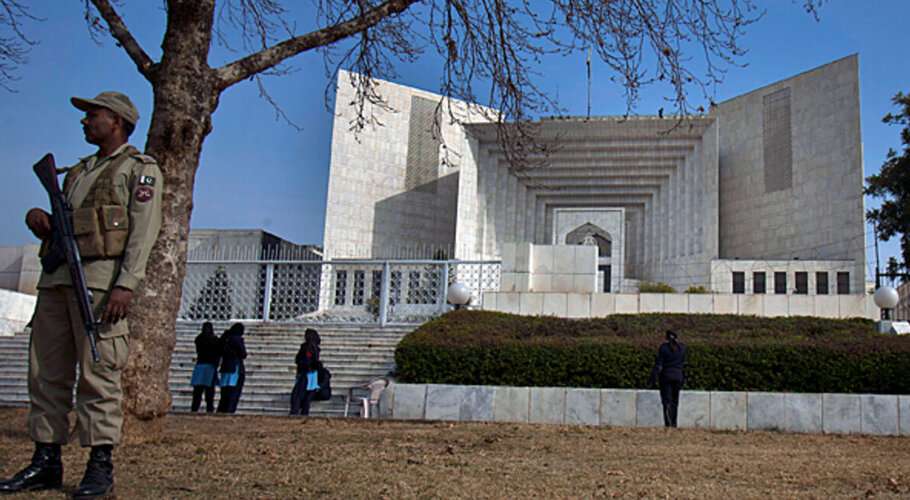
ISLAMABAD: The Supreme Court has released its detailed judgment in the NA-251 election petition case, declaring that “any change in the vote is tantamount to spilling the blood of public aspirations”, and that the votes recorded on Form-45 as the sole basis for determining victory, ruling that the “Returning Officer has no authority to alter or recount the votes recorded in Form 45.”
In its 10-page detailed verdict issued here on Wednesday, the Court held that the Returning Officer “has stabbed the public mandate in the back” through post-poll changes to the results, adding that such alterations constitute a “grave irregularity” that undermines the electoral process.
Form-45 Declared Conclusive
Addressing the controversies that surrounded Election 2024 over discrepancies between Form-45 and Form-47 results, the Court emphasized: “This Court is not powerless; where the evidence conclusively demonstrates that the Appellant secured a lawful majority, the proper course is not to direct a re-poll, but to declare the Appellant duly elected.”
The judgment relied on Forms-45, duly acknowledged for their authenticity, and noted: “The law neither condones manipulation nor permits its fruits to endure.”
In a significant portion of the judgment, the Court stressed it is “not powerless” when confronted with tampering. Where “evidence conclusively demonstrates that the Appellant secured a lawful majority,” the Court held, “the proper course is not to direct a re-poll, but to declare the Appellant duly elected.”
Underscoring its stance on electoral integrity, the judgment added: “The law neither condones manipulation nor permits its fruits to endure.” The Court relied on Forms-45, duly acknowledged for their authenticity, to reach its conclusion.
The judgment further noted that “deliberate alteration of results forms the basis for criminal proceedings” against those responsible.
By refusing a re-poll and ordering criminal proceedings against those behind the result changes, the Court signaled zero tolerance for tampering,a decision reinforcing that manipulated outcomes will not stand, and those responsible face prosecution.
The case C.A. 1151/2025, it may be recalled here, stemmed from a petition challenging the NA-251 election results. The detailed verdict follows the Court’s earlier short order and expands on the reasoning behind declaring the RO’s conduct unlawful.
Court’s Observations
The bench emphasized the sanctity of the vote, framing tampering as a direct assault on democratic will. By equating result manipulation with “spilling the blood of public aspirations,” the Court underscored the severity with which it views electoral fraud.
With the Court finding that deliberate changes to results warrant criminal action, the matter is expected to be referred for prosecution of those involved in the alleged manipulation.
The Election Commission of Pakistan has not yet issued a statement on the detailed verdict till the filing of this report.