











WASHINGTON: US President Donald Trump has once again asserted that the conflict with Iran is “very close to over,” even as a tense naval blockade persists and a fragile ceasefire enters its final week.
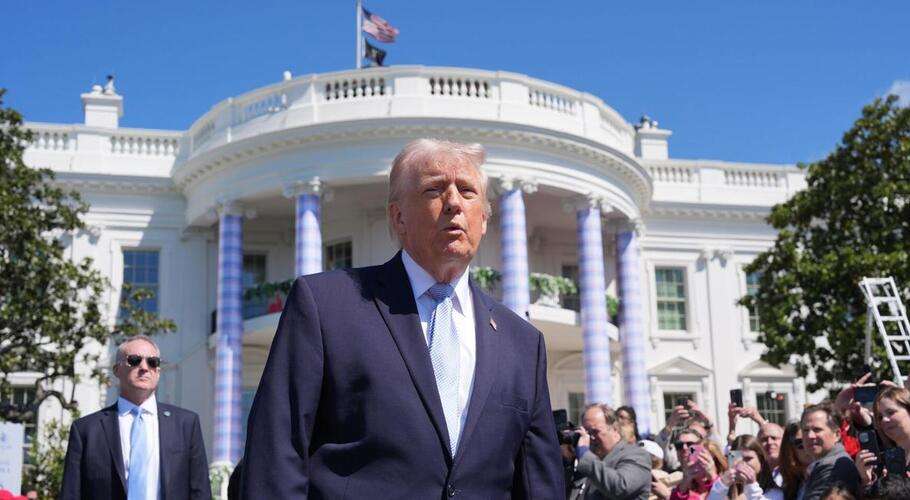
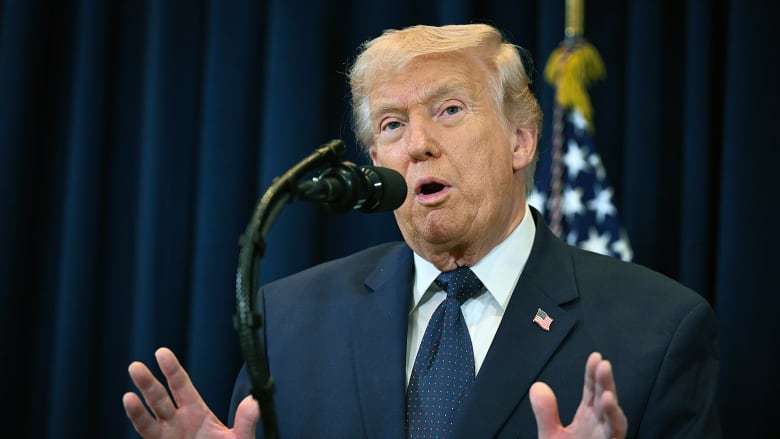
Speaking in an interview with Fox Business’s Maria Bartiromo, clips of which began airing on Tuesday, the US President struck a characteristically optimistic yet forceful tone. “I think it’s close to over, yeah. I mean, I view it as very close to over,” Mr. Trump stated, while cautioning that American operations are “not finished” yet.
Maria Bartiromo: “You keep saying ‘was.’ Is this war over?”
President Trump: “I think it’s close to over, yeah. I mean, I view it as very close to over.” pic.twitter.com/Xejn6qwFEX
— Julia 🇺🇸 (@Jules31415) April 15, 2026
The President’s remarks come at a critical juncture for regional stability.
Diplomatic sources and officials in Islamabad confirmed on Wednesday that a second round of face-to-face negotiations could materialize in the Pakistani capital within the next 48 hours. This follow-up comes after an initial 21-hour marathon of talks held at the Serena Hotel over the weekend, which concluded without a definitive breakthrough but established a foundation for further engagement.
https://archive.mmnews.tv/us-iran-likely-to-resume-talks-in-islamabad-after-inconclusive-first-round/
President Trump credited the potential for a swift return to the negotiating table to the mediation efforts of Pakistan’s military leadership, describing the environment in Islamabad as conducive to a “grand bargain.” He noted that “something could be happening over the next two days,” hinting at a renewed push for a diplomatic settlement before the current ceasefire expires on April 21.
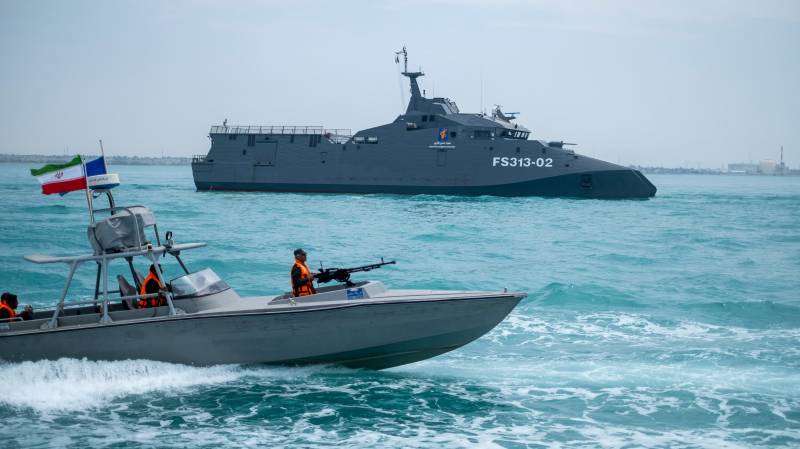
During the interview, the US President maintained that Tehran is under extreme duress due to the ongoing naval blockade of Iranian ports and the continued closure of the Strait of Hormuz. Claiming that the Iranian leadership “wants to make a deal very badly,” Mr. Trump argued that his administration’s “maximum pressure” tactics had prevented a nuclear-armed Iran. He warned that if the US were to “pull up stakes right now,” it would take the Islamic Republic “20 years to rebuild that country.”
However, observers noted that despite the President’s upbeat assessment, the reality on the ground remained complex. While a temporary ceasefire is technically in place, the US Central Command (CENTCOM) continues to enforce a rigorous blockade, with reports of US destroyers interdicting tankers attempting to depart from Iranian harbours.
Vice President JD Vance, who has been leading the American delegation in previous rounds of talks, noted that while “a lot of progress” has been made, significant “mistrust” remains between the two nations. The primary sticking points continue to be the permanent status of Iran’s nuclear programme and the lifting of maritime restrictions in the Persian Gulf.
Meanwhile in Tehran, officials have pushed back against the American narrative of desperation, with a spokesperson for the Iranian Foreign Ministry stating that while they remain open to dialogue, they will not “bow to threats.” The upcoming 48 hours in Islamabad are now viewed by many as the definitive window to prevent a return to full-scale hostilities.