










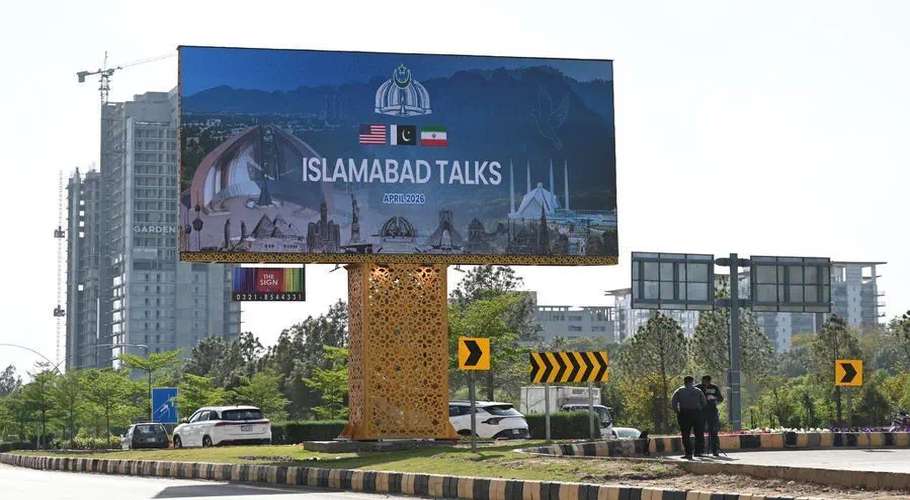
ISLAMABAD: The absence of any reference to the two‑week ceasefire announced by President Trump on April 7 loomed large over the conclusion of 21 hours of marathon negotiations between the United States and Iran in Islamabad.
The truce, set to expire on April 21, was not mentioned once by Vice President JD Vance during his brief remarks, leaving observers to note that “it’s not over till it’s over.”
The talks, the first direct engagement between Washington and Tehran since 1979, ended without breakthrough. Vance confirmed that the U.S. delegation had tabled what he described as a “final and best offer,” but declined to elaborate.
“We leave here with a very simple proposal, a method of understanding that is our final and best offer. I won’t go into all the details, because I don’t want to negotiate in public after we negotiated for 21 hours in private, but the simple fact is that we need to see an affirmative commitment that they will not seek a nuclear weapon, and they will not seek the tools that would enable them to quickly achieve a nuclear weapon,” he said.
https://archive.mmnews.tv/us-iran-negotiations-end-in-deadlock-after-21-hours-in-islamabad/
Diplomatic sources said both sides remained firm on long‑standing red lines. Yet the silence on the ceasefire — announced by Trump and now nearing its April 21 deadline — added uncertainty to the outcome. Analysts suggested the omission may have been deliberate, leaving space for Tehran’s response before Washington signals its next move.
As in earlier sessions, Vance praised Pakistan’s leadership, thanking Prime Minister Shahbaz Sharif and Chief of Army Staff Field Marshal Asim Munir for hosting the dialogue. He stressed that “whatever shortcomings in the negotiation, it wasn’t because of the Pakistanis, who did an amazing job and really tried to help us and the Iranians bridge the gap.”
Senior advisers Witkoff and Kushner, who accompanied the Vice President, did not speak at the press conference. Their silence reinforced the impression of a tightly controlled message, with Washington intent on projecting unity while leaving the ceasefire question conspicuously untouched.
Observers believe the deadlock echoes the earlier breakdown reported after Vance’s departure, but the unspoken ceasefire remains the most pressing variable. With April 21 approaching, the absence of clarity leaves both sides — and regional mediators — waiting to see whether the truce holds or collapses into renewed confrontation.