










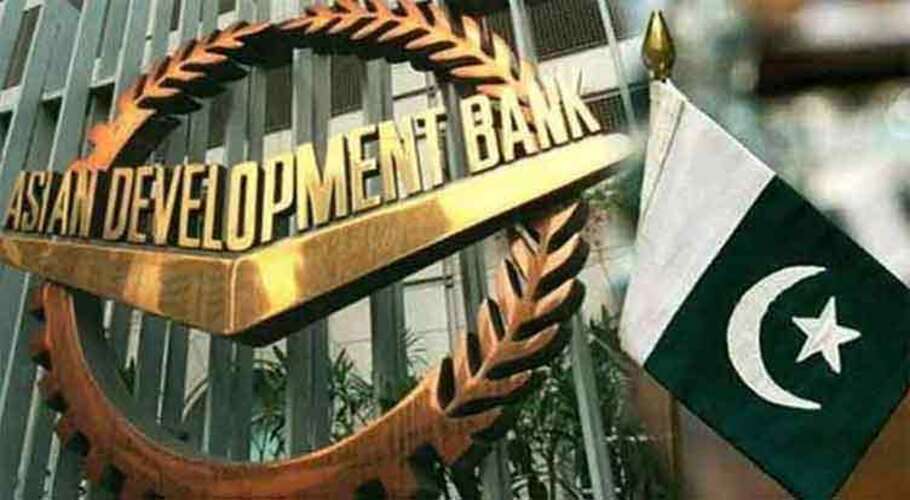
ISLAMABAD: Islamabad has approached the Asian Development Bank under a new programme that would disburse half the funds immediately to stabilise foreign reserves, with the remainder earmarked for disaster response over five years.
https://archive.mmnews.tv/black-rain-pollution-from-us-iran-war-may-force-pakistan-to-pursue-aid/
Pakistan has formally sought a $1 billion loan from the Asian Development Bank (ADB) under the Climate Disaster Resilience Enhancement Programme (CDREP), in what officials describe as a critical step toward building the country’s defences against an escalating cycle of climate-induced catastrophes.
The proposed facility is structured in two tranches. The first $500 million is to be released promptly and will be directed at stabilising Pakistan’s foreign exchange reserves — a priority that reflects the country’s persistently fragile external account position. The remaining $500 million is to be held in reserve and deployed over a five-year period specifically for disaster response operations.
Unlike traditional budgetary support, the loan is tied not to direct cash contributions but to a binding framework of climate-related policy reforms and budgetary restructuring — a conditionality that sources close to the negotiations say will require Islamabad to accelerate institutional changes it has long deferred. The precise scope of these reforms is still being finalised between Pakistani authorities and ADB technical teams.
The urgency of the request reflects the scale of Pakistan’s climate vulnerability. The country consistently ranks among the most exposed nations in the world to extreme weather events, with recurrent flooding along the Indus basin, prolonged droughts in Balochistan and interior Sindh, and increasingly erratic monsoon patterns posing an existential threat to agriculture, infrastructure, and livelihoods. The catastrophic 2022 floods, which submerged a third of the country, remain a haunting benchmark for what unpreparedness can cost.
Climate economists and international development institutions estimate that Pakistan requires between $30 billion and $60 billion annually to mount an adequate response to climate-related disasters — a figure that dwarfs available domestic and international financing. The ADB loan, while significant, represents a fraction of that requirement, underscoring the depth of the funding gap facing Islamabad.
Officials and independent analysts have also flagged severe structural weaknesses that risk undermining the effectiveness of any new financing. Weak institutional coordination between federal and provincial disaster management bodies, fragmented governance frameworks, and a chronic absence of integrated early warning and emergency response systems have historically meant that funds — when available — are absorbed inefficiently or do not reach the communities most in need.
Observers say the CDREP, if approved, must be accompanied by concrete governance reforms if it is to deliver lasting impact. “The money alone changes nothing,” one development finance expert said. “Pakistan needs to fix how its disaster management architecture actually functions.”
The ADB is expected to conduct a formal appraisal of the request in the coming weeks. A decision on approval and disbursement timelines is anticipated before the onset of the next monsoon season.