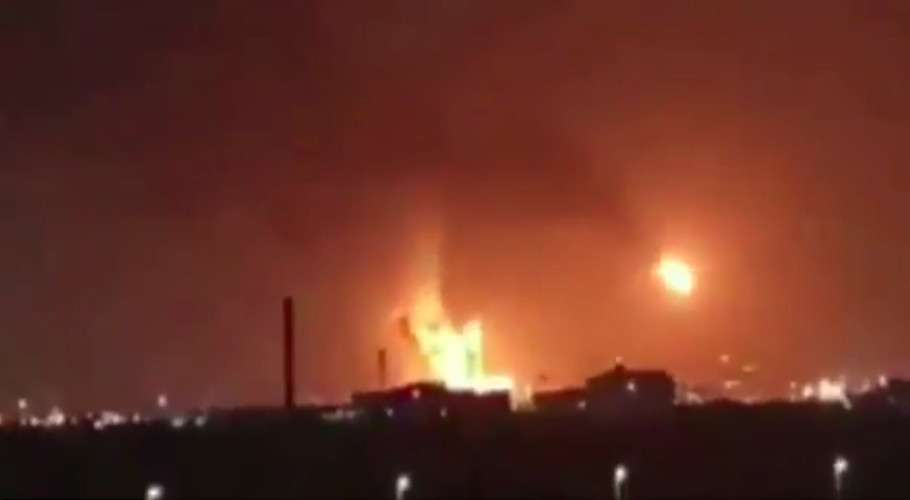
JUBAIL: A massive fire has engulfed the Saudi Basic Industries Corporation (SABIC) plant—the Middle East’s largest petrochemical facility—following a barrage of missile strikes targeting Jubail Industrial City overnight.
The incident, occurring amid a sharp regional escalation, has sent shockwaves through global energy and commodities markets, with experts warning of a “global industrial cardiac arrest” if production remains suspended.
The Middle East’s largest petrochemical plant, Saudi Basic Industries Corporation (SABIC), is on fire in Jubeil Industrial City following a missile strike. pic.twitter.com/TPOnhO4ZLL
— Narjes Rahmati 🟩☫🟥 نرجس رحمتی (@Narjes_Rahmati) April 6, 2026
Multiple reports from western media outlets and media footage circulating on verified social media accounts show a towering inferno illuminating the skyline of Jubail, one of the world’s most critical industrial hubs.
According to Saudi defense sources, the Kingdom’s air defense systems successfully intercepted several ballistic missiles launched toward the city. However, falling debris from a neutralized projectile reportedly struck a primary processing unit at the SABIC facility, igniting the blaze.
While damage assessments are currently underway, the Royal Commission for Jubail and Yanbu (RCJY) has yet to release official figures on casualties. Emergency response teams remain on high alert as the situation continues to develop.
A Hub of Innovation Under Fire
The strike targets a city that had recently become a global poster child for industrial sustainability. Only last year, Jubail was lauded for launching the world’s largest smart irrigation network.
The system features:
– 11,600 km of AI-supported pipelines.
– 12,200 smart devices managing recycled water.
– A primary focus on climate resilience and environmental protection.
In January 2025, Jubail further cemented its status by becoming the first Middle Eastern industrial city to join a prestigious global collaboration platform dedicated to industrial best practices and net-zero transitions. The current destruction threatens to undo years of sophisticated infrastructure development.
Global Economic “Cardiac Arrest”
Market analysts are painting a grim picture of the fallout of Jubail strike. With Iran’s own petrochemical sector already strained by ongoing conflict, a simultaneous shutdown of SABIC’s output could cripple the global supply chain.
“We are looking at a potential removal of nearly 20% of the world’s trade in methanol, urea, and polymers,” noted one senior energy analyst. “This isn’t just about fuel; it’s about the building blocks of modern life.”
Projected Consequences:
– Inflation Spike: Estimates suggest a 1.5% to 2% increase in global inflation through the petrochemical channel alone.
– Food Security: The loss of urea production—a critical fertilizer component—poses a dire threat to global agricultural yields.
– Medical Crisis: Shortages in polymers could disrupt the manufacturing of essential medical equipment and packaging.
Not just that, but the escalation has sparked fears that the “2026 Iran War” could eventually claim a higher global casualty figure than the COVID-19 pandemic, primarily due to the indirect effects of economic collapse, famine, and medical shortages.