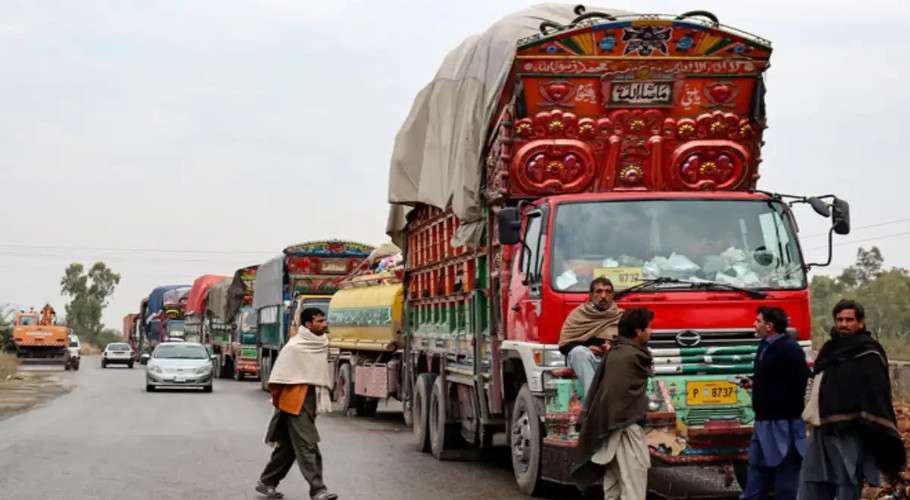
KARACHI: The president of the Pakistan Goods Transport Alliance (PGTA), Malik Shahzad Awan has announced a 60% increase in fares by transporters nationwide and warned of a possible halt to transport operations unless the federal government reversed its policies, after the government on Thursday raised petroleum prices to record highs.
The PGTA represents owners and operators of goods-carrying vehicles across Pakistan.
In a video statement, Awan condemned the “historic” increase in petroleum prices announced late on April 2, saying the move — which pushed petrol to Rs.۔458.40 per litre — would “bring a storm of inflation” across the country. He said transporters had decided to raise fares by 60% in response to the surge in fuel costs.
“Due to the wrong policies of the federal government, lakhs of people are becoming unemployed,” Awan said, adding that in the last three months petrol prices had risen by Rs.205 per litre and diesel by Rs.263.78. “If the federal government does not revise its policies, the transport of Pakistan will stop,” he warned.
Awan’s announcement is likely to add to inflationary pressures already felt by households and businesses. The transport sector is a critical link in supply chains for goods and agricultural produce; sustained disruption could push up prices of essential items and exacerbate supply constraints.
No immediate response was available from the federal government or the Ministry of Finance to Awan’s ultimatum as officials were yet to comment on whether any emergency consultations will be held with transport representatives.
Analysts said that while transporters’ demands for relief are predictable after sharp fuel-price shocks, a unilateral fare increase of the magnitude announced could deepen the economic strain on consumers already facing high inflation and rising commodity prices.
Awan’s statement follows weeks of public disquiet over successive increases in petroleum prices that have put pressure on transport operators’ margins and working capital.
If transport services are interrupted at scale, market observers warned, disruptions could quickly ripple through food distribution networks and industrial supply chains, potentially prompting further price volatility.