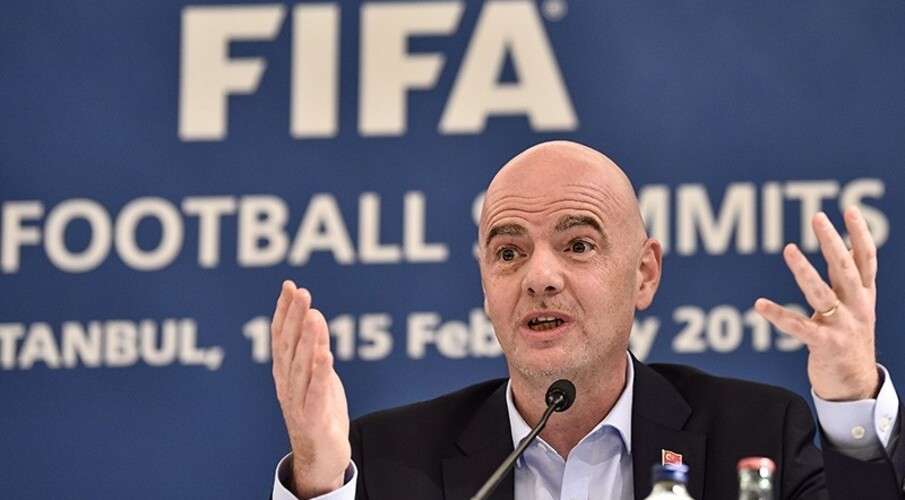
ISTANBUL: FIFA President Gianni Infantino has said that Iran’s national football team will compete at the 2026 World Cup and play its scheduled group matches in the United States, despite the ongoing war involving Iran, the U.S. and Israel.
Infantino made the announcement after meeting in Turkey with Iran’s squad, head coach, and the vice president of the Iranian Football Federation. “Everything is fine,” he said, adding that Iran’s fixtures will go ahead “according to the draw” with “no Plan B, C, or D — only Plan A.”
Iran, which has qualified for the tournament, will face New Zealand in Los Angeles on June 15, Belgium in Los Angeles on June 21, and Egypt in Seattle on June 26. The World Cup opens June 11 in the United States, Canada and Mexico.
The decision comes amid heavy fighting that began on Feb. 28, when U.S. and Israeli airstrikes targeted Iran, prompting retaliatory attacks, assassinations of Iranian leaders and continued strikes into April. The conflict had raised doubts over Iran’s participation and prompted Tehran to request its matches be relocated to Mexico, a proposal Mexico’s president had signaled openness to.
U.S. President Donald Trump had earlier said it would be inappropriate for Iran to play in America under current circumstances, but later assured Infantino in a March meeting that Iran’s team would be “welcome” to compete. FIFA’s stance aligns with the U.S. administration and the co‑hosting agreement, overriding Iran’s relocation request.
Middle East analysts say the move is highly unusual and symbolically powerful: a team from a country at war with a host nation being guaranteed visas, safe passage and stadium access weeks before kickoff. Observers describe it as a rare assertion of “sports diplomacy,” prioritizing football over geopolitics in the midst of missile exchanges and regional escalation.
While some see the decision as a potential bridge for dialogue or an attempt to project normalcy, risks remain over security for Iranian players and fans, travel logistics under airspace restrictions, and political backlash in both countries.