An Iranian missile and drone strike reportedly targeted the Prince Sultan Air Base in Saudi Arabia on March 27, according to a report by The Wall Street Journal. The installation lies roughly 96 kilometers southeast of Riyadh.
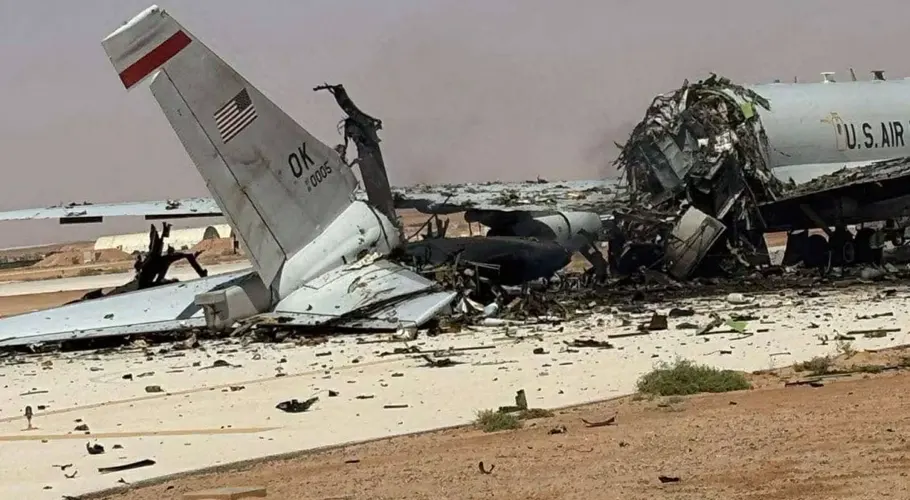
The attack is said to have damaged several KC-135 refueling aircraft, which support US jets mid-air, along with an E-3 Sentry airborne early warning and control aircraft, according to Air & Space Forces Magazine.
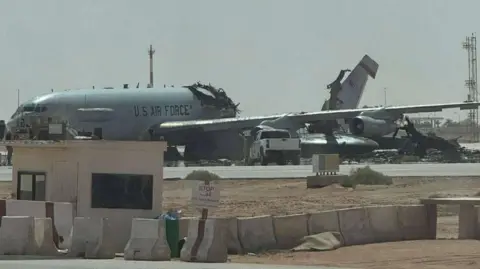
Images from the scene indicate extensive destruction, with the rear section of one E-3 aircraft completely burned out and debris scattered around it.
According to Associated Press, at least 15 US personnel were injured in the strike, including five in critical condition, citing officials familiar with the situation.
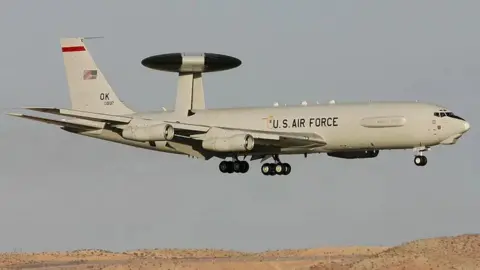
Military analysts warn the damage could significantly affect US operational capabilities. Cedric Leighton, a former Air Force colonel, was quoted as saying by CNN that the loss of an AWACS platform represents a major setback for aerial surveillance.
He noted that such systems are central to directing combat aircraft, guiding them to targets, and shielding them from enemy threats, including aircraft and missile systems.
The E-3 AWACS plays a crucial role in monitoring vast areas of airspace—up to 120,000 square miles—from low altitude to the edge of the stratosphere. With a fleet of 17 aircraft and decades of operational experience, the system has long been considered a key advantage for US military operations.