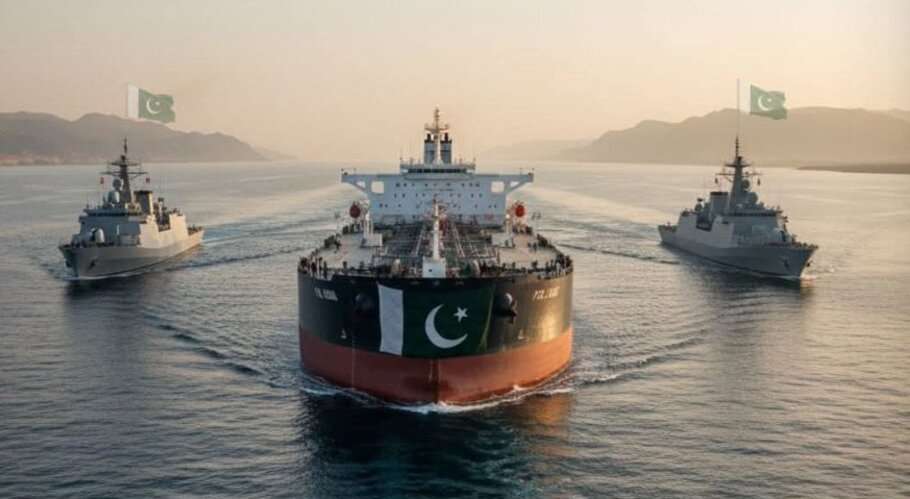
ISLAMABAD: Iran has agreed to allow 20 Pakistani-flagged ships to transit the Strait of Hormuz, Pakistan’s Foreign Minister Ishaq Dar said the other day, describing the move as a confidence-building measure aimed at reducing regional tensions.
Under the arrangement, two Pakistani vessels will cross the strategically vital waterway each day, Dar said in public statements and a post on X, formerly Twitter.
I am pleased to share a great news that the Government of Iran has agreed to allow 20 more ships under the Pakistani flag to pass through the Strait of Hormuz; two ships will cross the Strait daily.
This is a welcome and constructive gesture by Iran and deserves appreciation. It…
— Ishaq Dar (@MIshaqDar50) March 28, 2026
“This positive announcement marks a meaningful step toward peace and will strengthen our collective efforts in that direction,” Dar said, calling Iran’s decision a “welcome and constructive gesture” and a “harbinger of peace.”
The agreement expands an earlier informal arrangement under which Iran had already permitted the transit of several Pakistan-linked vessels in recent weeks. The new deal formalises and broadens that understanding.
The development follows series of reports suggesting how Islamabad has been playing an active mediation role in back-channel negotiations between Washington and Tehran — a role confirmed by U.S. special envoy Steve Witkoff.
The Strait of Hormuz, a narrow waterway between Iran and Oman, is one of the world’s most critical maritime chokepoints, through which a significant share of global oil exports passes. Any disruption to traffic through the strait carries wide implications for energy markets and international trade.
Dar said the move would help usher in stability in the region and support broader de-escalation efforts, adding that “dialogue, diplomacy, and such confidence-building measures are the only way forward.”
Pakistani officials have framed the agreement as part of Islamabad’s broader diplomatic push to position itself as a neutral bridge between the United States and Iran at a time of heightened tensions in the Middle East.