










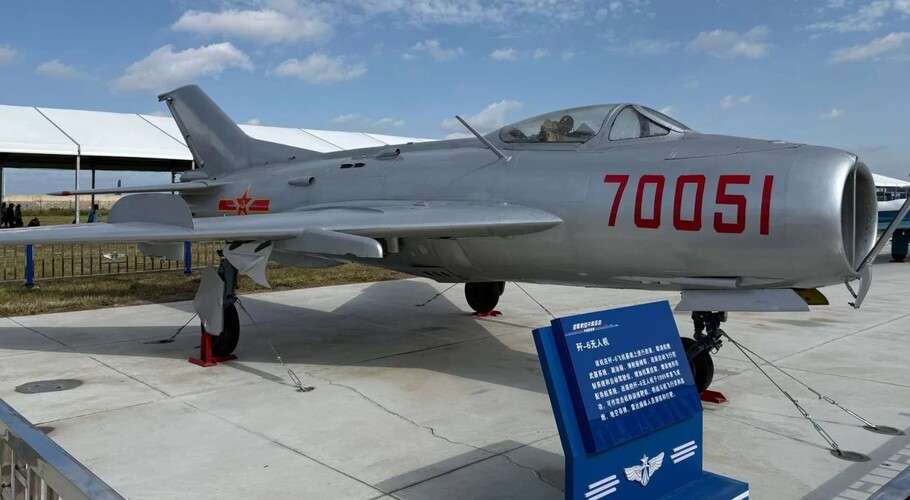
BEIJING: China has forward-deployed more than 200 repurposed Shenyang J-6 fighter jets — now converted into unmanned, supersonic “kamikaze” drones — at six air bases across Fujian and Guangdong provinces, directly opposite Taiwan, according to satellite imagery and defense analysts.
The J-6W drones, once Cold War-era manned fighters, are now expendable platforms designed for massed saturation strikes to overwhelm air defenses, deplete missile stocks, and serve as decoys or one-way attack systems.
Analysts, including J. Michael Dahm of the Mitchell Institute, say the deployment reflects Beijing’s strategy of leveraging low-cost, high-volume assets amid global distractions — particularly U.S. military commitments in Ukraine and the Middle East.
While China has not officially confirmed the move, open-source evidence and Taiwanese assessments suggest Beijing is exploiting perceived U.S. over-extension to test deterrence and escalate gray-zone pressure without triggering full-scale conflict.
The PLA’s 7% defense budget increase for 2026 underscores continued modernization, even as Beijing avoids setting a fixed invasion timeline. “They’re not starting wars — they’re capitalizing on them,” one U.S. observer noted. “This is great-power opportunism, not coincidence.”
Interestingly, U.S. intelligence too says China is building the capability to seize Taiwan if it chooses, even while preferring non-kinetic pressure for now—no fixed 2027 invasion date, but the military modernization continues full steam.
Military observers say China didn’t create these conflicts, but it’s not wasting the window. When the U.S. shifts carriers, ammo, and attention elsewhere, Beijing turns up the gray-zone pressure (incursions, drones, exercises) to erode Taiwan’s deterrence and signal that U.S. commitments aren’t ironclad