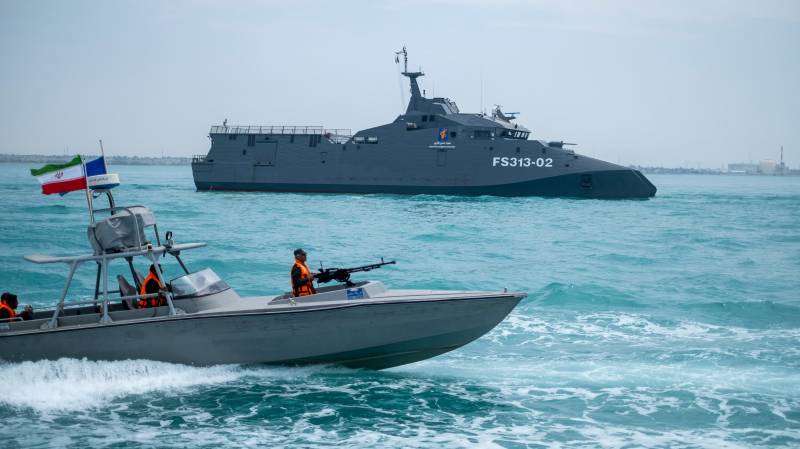











RIYADH: Saudi Arabia on Thursday issued a stern warning to Tehran, stating that the Kingdom’s patience in the face of escalating regional hostilities is “not unlimited” and that it reserves the right to respond militarily to Iranian aggression.
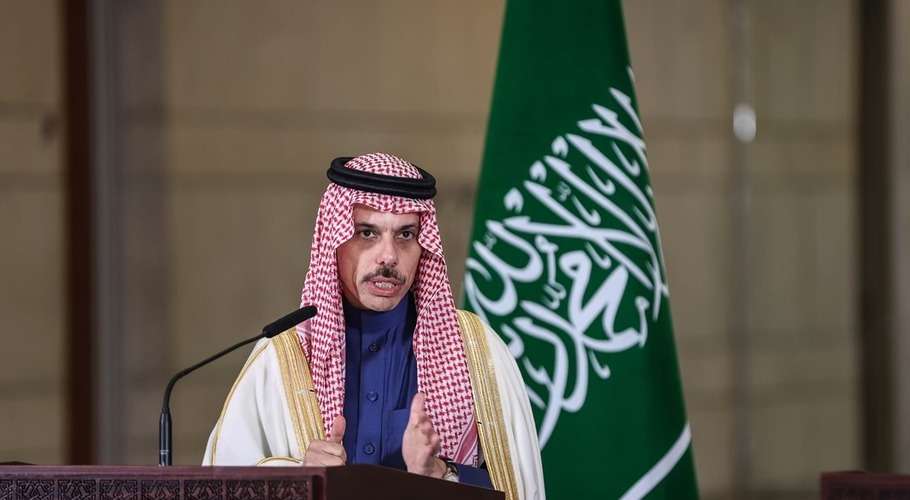
Speaking at a high-stakes news conference in the Saudi capital early Thursday morning, Foreign Minister Prince Faisal bin Farhan urged the Iranian leadership to immediately “recalculate” its strategy. The warning comes as the region reels from a wave of sophisticated missile and drone strikes targeting critical energy infrastructure in Qatar and the United Arab Emirates.
The Foreign Minister’s remarks followed an emergency consultative meeting of foreign ministers from Arab and Islamic countries, convened to address an expanding war that has increasingly moved from military to economic targets.
“The Kingdom and its partners possess very significant capacities and capabilities,” Prince Faisal told reporters. “We reserve the right to take military action should we choose to do so.”
The minister asserted that despite denials from Tehran’s diplomats, the recent strikes appeared to be a “carefully planned strategy” targeting civilian and industrial sites. He specifically referenced Wednesday’s attacks on Qatar’s Ras Laffan gas facility—the world’s largest LNG hub—where “extensive damage” and fires were reported, and the United Arab Emirates’ Habshan gas facility, which was forced to suspend operations.
It is pertinent to add here that the sudden escalation against regional energy infrastructure is widely viewed as a retaliatory strike following a major security breach involving Iran’s own strategic assets. On Wednesday, March 18, 2026, an offshore facility at Iran’s South Pars gas field was hit by missiles. Iranian officials and regional media have attributed the strike to Israel, reportedly with U.S. consent.
Tehran had previously warned that if its own energy infrastructure—the backbone of its “resistance economy”—was targeted, it would ensure that no other state in the region could safely export oil or gas. By striking Ras Laffan and Habshan, Iran is attempting to prove that it can inflict “uncontrollable consequences” on global energy markets
This “tit-for-tat” shift toward economic warfare follows the confirmed assassination of Iranian Intelligence Minister Esmail Khatib in an Israeli airstrike earlier on Wednesday. Analysts suggest Tehran is now pursuing a doctrine of “uncontrollable consequences,” signaling that if its own energy exports are jeopardized, no other Gulf state will be permitted to maintain a secure supply chain to the global market.
Characterising Tehran’s current foreign policy as one of “blackmail,” Prince Faisal stated that the repeated targeting of infrastructure has led to a total collapse of trust. The South Pars reservoir, which Iran shares with Qatar as the North Field, has now become a central flashpoint in the conflict.
“Iran is miscalculating if it believes the Gulf states are incapable of responding,” the Prince said. “These attacks will bring Tehran no gains; they will only deepen its international isolation and violate the fundamental principles of good neighbourliness.”
The Saudi top diplomat revealed that member states of the Gulf Cooperation Council (GCC) are currently coordinating a unified front. As global oil prices surge past $108 a barrel, the Foreign Minister emphasized that the choice between further escalation and regional stability now lies firmly with Tehran.