LAHORE: The Punjab government has approved a province-wide initiative to construct 358 underground water storage tanks, signaling a massive expansion of an already-existing urban drainage model that has been in pilot phases for over five years.
While official handouts have described the move as a “first-ever major project”, the initiative is effectively the first large-scale geographic rollout of a technology already operational in Lahore since 2020.
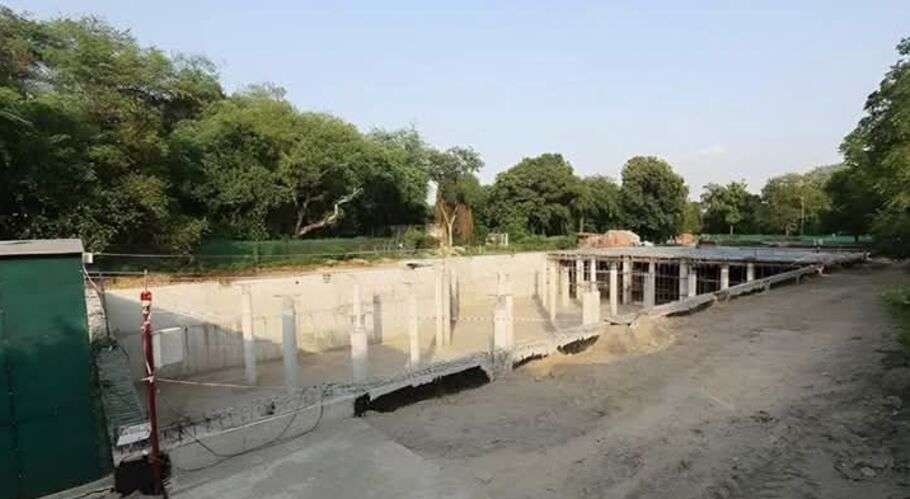
It may be recalled that the first major underground rainwater reservoir was actually launched in July 2020 at Lawrence Garden (Bagh-e-Jinnah), Lahore, and has since been operational for years.
Reports suggest that since 2020, at least 13-15 other major tanks have already been built or are near completion in Lahore alone (at locations like Sheranwala Gate, Kashmir Road, and Gaddafi Stadium).
However, it is noteworthy that previous projects were restricted to Lahore, and this is the first time 358 tanks are being rolled out across dozens of cities (Sargodha, Multan, DG Khan, etc.) simultaneously.
The project approved by Chief Minister Maryam Nawaz, officials said, aims to mitigate urban flooding and replenish depleting aquifers by capturing rainwater through a network of 34 large-scale urban reservoirs and 324 roadside tanks.
Unlike previous standalone installations, this phase seeks to integrate 328 wastewater treatment plants to process stored water for irrigation, representing the first attempt to create a synchronized, province-wide infrastructure for Managed Aquifer Recharge (MAR).
Under the plan, 34 large underground tanks will be constructed in urban areas to ensure timely rainwater drainage, while 324 roadside tanks will be built to remove water accumulated on streets.
Recharge wells alongside the tanks will help restore groundwater levels, and the stored water will be treated at water treatment plants for irrigation purposes. Additionally, 328 wastewater treatment plants will be established across the province.
Officials said that the meeting was informed that 6,100 kilometres of streets will be paved, 3,498 kilometres of sewerage lines laid, 14,679 streetlights installed, and 33 million square feet of tuff tiles placed in streets and pathways.
To improve drainage and municipal services, 526 modern machines and tractors will be deployed. A factory in Lahore for producing sewerage pipelines with a 100-year lifespan has also been installed and is expected to begin production soon.
Punjab Development Programme projects have been initiated in Sargodha, Dera Ghazi Khan, Gujrat, Okara, Jhang, Multan, and Sialkot, while projects in Jhelum, Hafizabad, Sahiwal, Faisalabad, Gujranwala, Sheikhupura, Nankana Sahib, and Rawalpindi will start shortly, officials added.
Under the Punjab Rural Sanitation Improvement Programme, drainage systems will be developed in rural areas, and Rs59 billion will be spent on 485 villages under the Model Village Project, with work already started in 200 villages. Wastewater ponds will be cleaned, treatment plants installed, and treated water supplied for irrigation.
The chief minister directed authorities to ensure proper functioning of filtration plants for clean drinking water, prioritise paved streets in villages, and complete drainage projects before the monsoon season, with Gujrat and Sialkot given special attention.
CM Maryam Nawaz said that the scale of development work being undertaken in Punjab today had not been seen in the past 70–80 years, and predicted that within five years, a modern, transformed, and beautiful Punjab would emerge.