











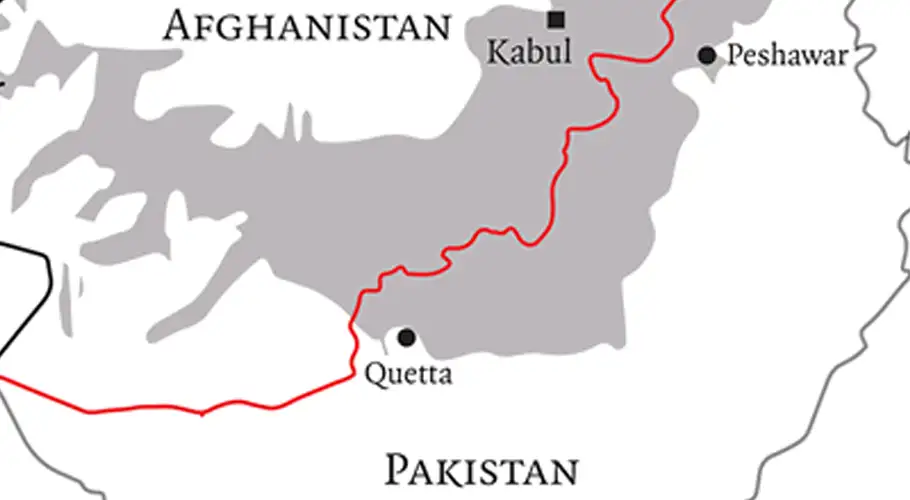
The Durand Line is the 2,670-kilometer border that separates Pakistan and Afghanistan. It was established in 1893 during British colonial rule, drawn up by Sir Mortimer Durand, a British diplomat, and Abdur Rahman Khan, the Amir of Afghanistan at the time.
The agreement was intended to define the limits of British India’s sphere of influence and Afghan territory.
The line cuts straight through the heart of the Pashtun tribal belt, effectively dividing the Pashtun and Baloch populations between the two sides of the border.
This is largely why it has remained one of the most contested and sensitive borders in the world.
Its importance stems from several reasons. From a historical standpoint, it was a product of British imperial strategy rather than any natural, ethnic, or cultural logic, which is why Afghanistan has never fully accepted it as a legitimate international boundary.
Every Afghan government since independence has contested its validity, arguing that the original agreement expired after a hundred years and was never truly binding.
From a security perspective, the porous and largely ungoverned stretches of the Durand Line have long served as transit routes for militants, smugglers, and armed groups.
Pakistan has in recent years constructed fencing along significant portions of the border in an effort to control movement, a move that Afghanistan has opposed.
Politically, the border remains a major source of tension between Islamabad and Kabul. Pakistan recognizes the Durand Line as its official international border, while Afghanistan’s refusal to do the same has fueled decades of diplomatic friction between the two neighbors.