










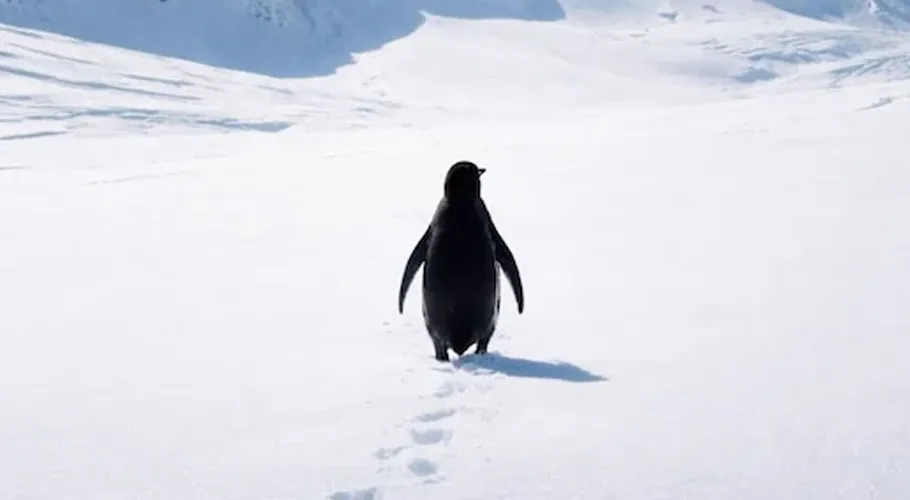
A nearly 20-year-old clip of a flightless bird has become the unlikely face of 2026. The “Nihilist Penguin,” an Adélie penguin seen waddling away from its colony toward the barren Antarctic interior, has dominated social media feeds this week, sparking a global conversation about burnout, “quiet quitting,” and the absurdity of modern life.
The Origin
The footage originates from Werner Herzog’s 2007 documentary, Encounters at the End of the World. In the haunting scene, Herzog’s signature deadpan narration describes a penguin that has “lost its mind.”
View this post on Instagram
While its peers head for the sea to feed, this lone bird turns 180 degrees and begins a 70-kilometer trek toward certain death in the mountains.
“Even if you caught him and brought him back, he would immediately head right back for the mountains,” Herzog notes in the film.
Why now? The 2026 Burnout Mascot
Though the footage is old, its resurgence in January 2026 is being fueled by a “polycrisis” of economic and social fatigue. On platforms like TikTok and X, users have overlaid the penguin’s march with somber organ music and captions like.
“Me walking away from my responsibilities.”
“When you finally realize the ‘grind’ doesn’t lead to the ocean.”
“The penguin knows something we don’t.”
Psychologists suggest the bird has become a “blank canvas” for a generation feeling “done” with societal expectations. It represents the ultimate act of “opting out” even if that path leads to oblivion.
A Tragic Error
While the internet celebrates a “rebel philosopher,” wildlife experts are quick to ground the story in a grimmer reality.
View this post on Instagram
Biologists state that such behavior is typically caused by neurological illness, injury, or extreme navigational confusion.
Far from a protest, the penguin is a “glitch in nature.” Heading inland means no food and no survival; it is a tragic mistake, not a choice of lifestyle.
Current Status
The “Nihilist Penguin” continues to trend as a symbol of the collective mood of 2026—a year where the desire to simply “walk away” seems more relatable than ever