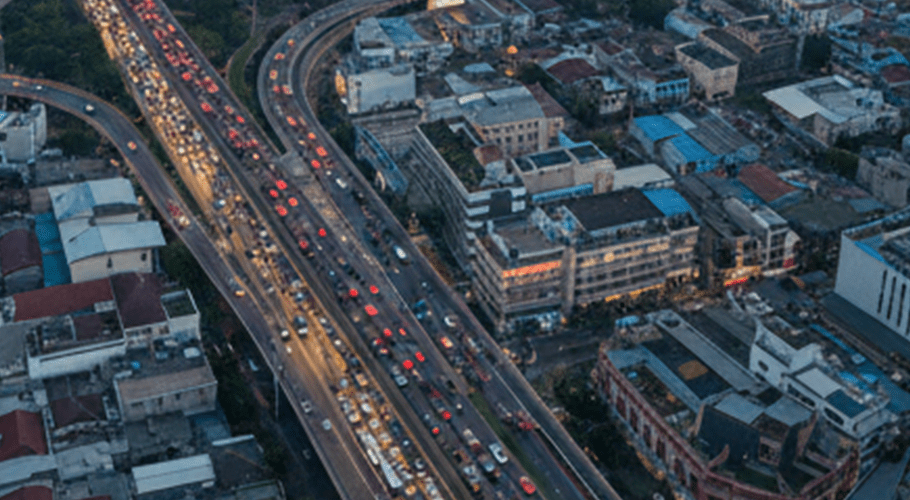
A major demographic shift has been revealed in the global urban landscape, as the latest United Nations’ World Urbanization Prospects 2025 report names Jakarta, Indonesia, the world’s most populous city.
With nearly 42 million residents, Jakarta has officially surpassed its longtime rivals, signaling the accelerating dominance of Asian megacities.
Rank 1: Jakarta, Indonesia (Approx. 42 million residents)
Rank 2: Dhaka, Bangladesh (Approx. 40 million residents)
Rank 3: Tokyo, Japan (Approx. 33 million residents)
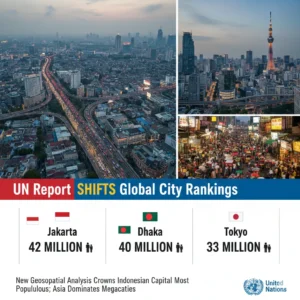
For decades, the Greater Tokyo Area held the top spot, but it has now slipped to third place, according to the UN’s new figures.
The Urban Shift in Asia
This dramatic re-ranking is attributed to the UN’s adoption of a new, harmonized geospatial approach to define urban settlements, providing a more consistent and comprehensive measure of urban agglomerations globally.
The report heavily underscores the trend of urbanization, particularly in Asia:
The majority of the world’s largest cities, known as “megacities” (urban areas with over 10 million inhabitants), are now located in Asia.
The findings highlight the tremendous pressures on infrastructure and resources in these rapidly expanding urban centers.
Future Projections
The fastest-growing urban areas are projected to be in South Asia, with Dhaka, in particular, expected to become the world’s largest city by mid-century.
The new data is set to reshape how global bodies and national governments plan for housing, transit, and environmental sustainability in the world’s fastest-growing regions.