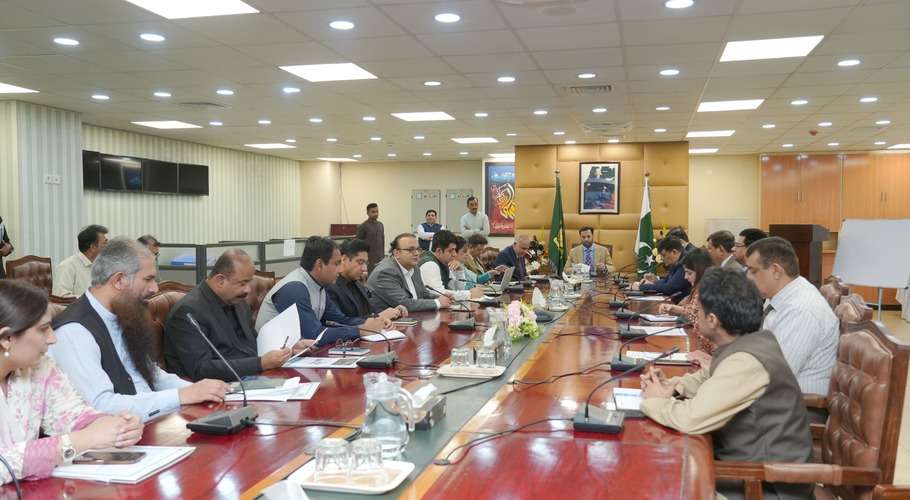












At a recent conference on mental health, it was revealed that 10 percent of Pakistan’s population is addicted to drugs, while around 1,000 people took their own lives last year due to various mental health pressures.
The 26th International Conference on Mental Health was held in Karachi, bringing together experts and psychiatrists from across Pakistan and abroad.
Chairman of the conference’s scientific committee, Professor Muhammad Iqbal Afridi, told The Express Tribune that one in every 3,000 Pakistanis (34 percent) suffers from some form of mental illness, compared to one in five people globally.
He said that depression among women in Pakistan is alarmingly high, primarily because they are not given the social recognition and respect they deserve. Domestic conflicts are a leading cause of severe depression and anxiety among women, while drug abuse among youth, including the use of crystal meth (ice) and other substances, is fueling a rise in psychiatric disorders.
Professor Afridi added that recurring natural disasters, such as earthquakes and floods, which have destroyed thousands of homes, as well as terrorism-related incidents, have had deep psychological effects on the public.
President of the Pakistan Psychiatric Society, Professor Wajid Ali Akhundzada, said that one in four young people and one in five children in Pakistan suffer from mental health issues. Around one percent of the population (2.5 million people) is directly affected by mental illness — representing 2.5 million families who have been impacted by economic hardship, political instability, floods, and other crises.
He reiterated that 10 percent of Pakistanis are drug addicts, and nearly 1,000 suicides were recorded last year due to mental stress and psychological conditions.
Akhundzada stressed that mental health services in Pakistan are severely inadequate, as the country’s population of 240 million is served by only 90 psychiatrists. According to the World Health Organization (WHO), there should be one psychiatrist for every 10,000 people; however, in Pakistan, one psychiatrist is available for approximately 500,000 patients.
Speaking at the conference, Dr. Afzal Javed and other experts said that economic disparities, natural disasters, unemployment, and ongoing border tensions have led to widespread psychological distress, particularly among the youth, who are increasingly losing hope in the face of persistent crises.
Experts urged the government to formulate a comprehensive national strategy to address these mental health challenges and to support young people in overcoming psychological issues.
They also pointed out that Pakistan’s forest cover stands at only 4 percent, which is negligible, leading to worsening climate change impacts that further contribute to stress and mental health deterioration.