








Pakistani drama serial Jama Taqseem is being praised for its sensitive and significant depiction of harassment within a joint family system.
The drama’s significance lies in its ability to raise awareness and force conversations about a widespread but often-silenced issue in South Asian society.
The drama airs twice a week on HUM TV. It is produced under MD Productions, written by Sarwat Nazir, and directed by Ali Hassan. It stars Mawra Hocane and Talha Chahour in the lead roles.
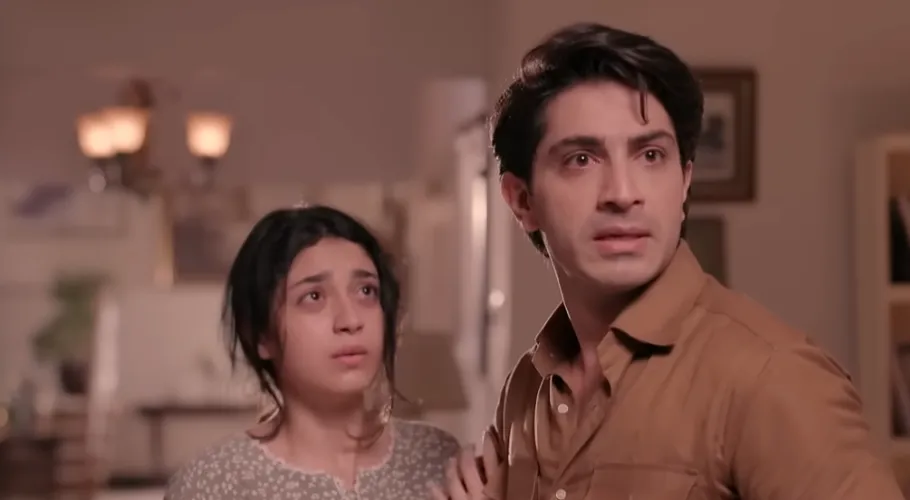
The story unfolds with Mawra Hocane portraying Laila, a progressive, educated young woman from a high-standard background who proposes to her classmate Qais, played by Talha Chahour. Qais comes from a well-off but deeply traditional joint family, where outdated customs and rigid thinking still prevail. As their married life begins, the real struggle starts, not due to a lack of love, but due to the suffocating interference and excessive restrictions imposed by Qais’s family.
https://archive.mmnews.tv/mawra-hocanes-drama-jama-taqseem-climbs-new-heights-of-fame/
But the recent episode aired on Wednesday; the storyline focuses on a character named Sidra, a young woman who is abused by her male cousin, Zeeshan, in the shared family home.
The show draws attention to the “hidden reality” that family, often viewed as a sanctuary, can be a source of danger for women and children.
Jama Taqseem critiques the abuse dynamic where Zeeshan uses his position to control Sidra, and the family elders fail to recognize her distress.
A key moment of social criticism occurs when Sidra’s own mother dismisses her concerns, using the common cultural justification that “cousins do tease their sisters.”
The drama actively challenges this and other forms of victim-blaming, illustrating how families often prioritize their reputation and perceived “honour” over a child’s safety.
It also highlights the danger of blurred boundaries in joint families, where treating non-immediate relatives as “siblings” can create an environment where abuse is easily dismissed or denied.
The relativity of the issue portrayed in the episode has prompted many viewers to share similar personal experiences, turning the drama into a cultural moment that advocates for change and encourages audiences to prioritize individual safety and dignity over rigid cultural customs.