









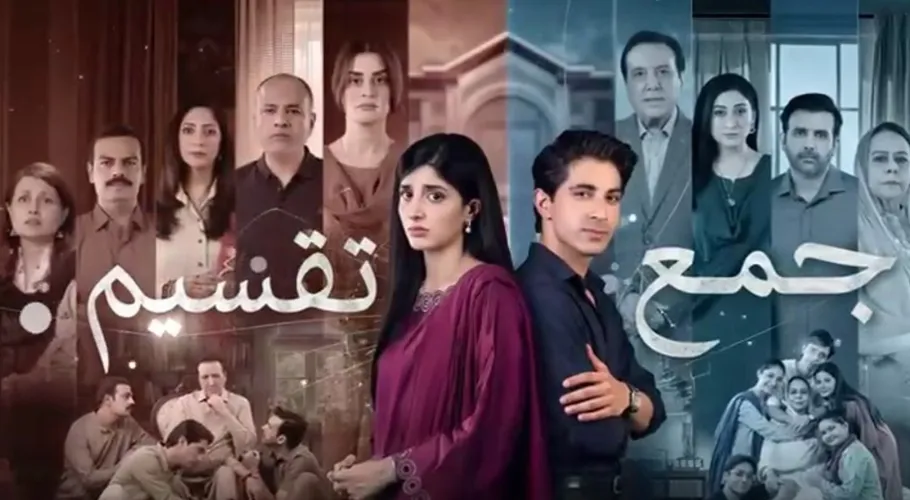
In a world full of manifestations and delusions, Jama Taqseem stands out as a realistic portrayal of the toxicity often found in South Asian households.
The drama airs twice a week on HUM TV. It stars Mawra Hocane and Talha Chahour in the lead roles.
It is produced under MD Productions, written by Sarwat Nazir, and directed by Ali Hassan.
While the joint family system is often celebrated as an emotionally strong and supportive structure, its darker side is either rarely explored or shown in extremes, either overly glorified or excessively vilified.
https://archive.mmnews.tv/in-pictures-mawra-shares-stunning-pictures-from-her-birthday-as-she-turns-33/
Jama Taqseem managed to earn its place as a top-tier drama for shedding light on these uncomfortable truths. It realistically depicts the experiences of many women in Desi households rather than necessarily offering something completely novel.
These include being made to perform household duties against their will, being denied fundamental rights or comforts in spite of the family’s financial security, engaging in unhealthy competition with members of the extended family, and even developing early rivalries that are stoked by elder manipulation.
But there’s also a viewpoint that is being viral on social media and shared by the topic called, is joint family system allowed in Islam? By Dr Israr Ahmed.
Dr. Israr Ahmed discusses the permissibility and practicality of the joint family system within Islam. The speaker asserts that while the joint family system is not strictly forbidden (haram), it is considered inadvisable due to several significant issues.
Primarily, the system makes it challenging to properly observe the Islamic rules of purdah regarding interaction between non-mahram (unrelated by close blood or marriage) family members.
https://archive.mmnews.tv/mawra-hocanes-drama-jama-taqseem-climbs-new-heights-of-fame/
Furthermore, Dr. Israr notes that the joint system frequently leads to interpersonal conflict among in-laws, such as disputes between mothers-in-law, daughters-in-law, sisters-in-law, and brothers’ wives.
He also suggested that separate living arrangements are preferable for maintaining peace and spiritual well-being.
The joint family system, where multiple generations live together under one roof, is not inherently prohibited in Islam. However, Islamic law grants specific rights to each family member that are often difficult to maintain in a joint setting.
So, Jama Taqseem serves as a critical social commentary on the negative aspects of the joint family system. While it explores the cultural norms surrounding inheritance and family structure in South Asia, it does so by exposing the system’s flaws, which often violate Islamic principles of privacy, justice, and individual rights.