










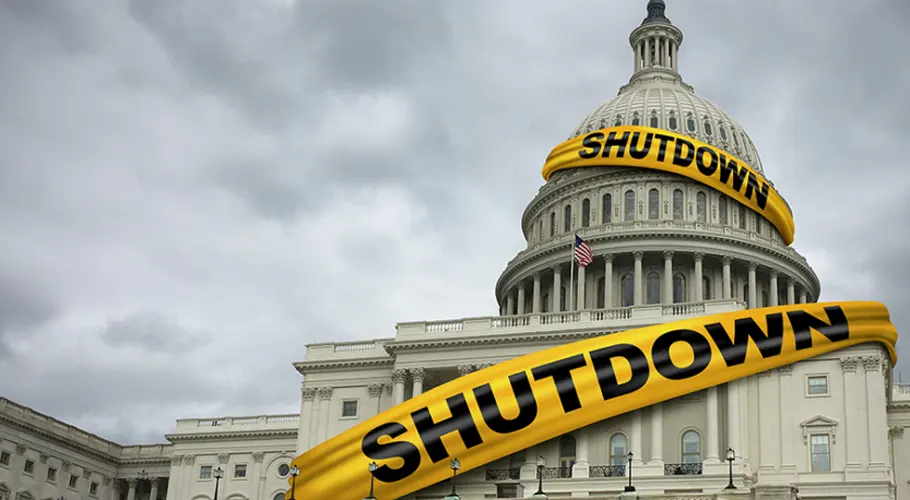
A shutdown in the US, which is also called a U.S. government shutdown, happens when funding runs out and all non-essential federal agencies and services are forced to close.
However, essential personnel, such as airport security staff, air traffic controllers, and federal law enforcement officers, continue working without pay until funding is reinstated.
Shutdowns occur when Congress fails to pass the 12 annual appropriations bills or a stopgap measure called a continuing resolution (CR) by the end of the fiscal year on September 30. During a shutdown, the government follows a contingency plan to determine which employees and services are critical to protecting “life and property” and must remain operational, and which are deemed non-essential and temporarily halted.
Many public services are halted or reduced. For example, national parks, federal museums, and government offices for non-essential services often close.
The effects can range from temporary inconveniences to significant disruptions for federal employees, government contractors, and the public.
In some cases, a shutdown can lead to permanent layoffs, known as a Reduction in Force (RIF), for federal workers.
Businesses that rely on federal contracts may lose revenue and face delays in payments. Small businesses can be impacted by pauses in federal loan processing.
A shutdown is resolved when Congress passes the necessary appropriations bills or a continuing resolution, which is then signed into law by the President.