










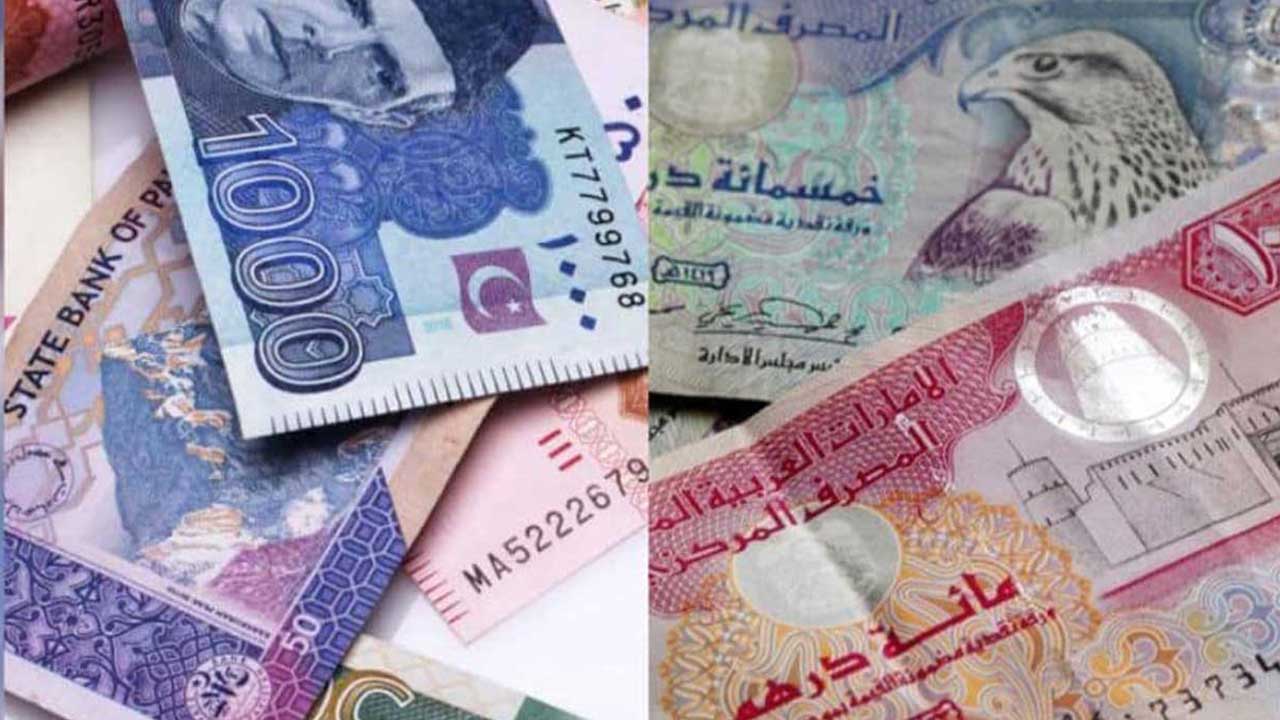
The UAE Dirham, officially adopted in 1973, is pegged to the US Dollar at a fixed rate of 3.6725 AED/USD, maintained by the Central Bank of the UAE.
This peg provides monetary stability and positions the AED as a reliable currency in international trade.
In contrast, the Pakistani Rupee (PKR), introduced in 1948, is a floating currency managed by the State Bank of Pakistan (SBP). It remains susceptible to fluctuations caused by domestic inflation, trade deficits, external debt pressures, and geopolitical developments.
Today’s slight decline in the AED-PKR rate offers limited relief to Pakistani importers sourcing goods from the UAE, potentially reducing short-term costs. However, the overall strength of the Dirham—fueled by sustained economic growth and policy consistency—continues to exert pressure on Pakistan’s trade balance.
For the Pakistani expatriate community in the UAE, which remitted $717.2 million in June 2025, the Dirham’s strength is largely positive.
The high exchange rate boosts the value of remittances back home, supporting household expenses and stimulating local economic activity. The UAE remains Pakistan’s second-largest source of remittances after Saudi Arabia, per SBP data.
However, the elevated AED also raises the cost of imported goods—including electronics, fuel, and consumer essentials—compounding inflationary pressures within Pakistan. Furthermore, the Dirham’s peg to the US Dollar contributes to higher debt servicing costs for Pakistan, especially on foreign loans denominated in USD or AED.
The UAE’s ability to maintain a strong currency stems from its diversified economic model, reduced reliance on oil, and sustained investments in technology, renewable energy, infrastructure, tourism, and financial services.
Global financial hubs such as Dubai and Abu Dhabi continue to attract foreign capital, backed by pro-business reforms and political stability.
The Central Bank of the UAE plays a pivotal role in upholding investor confidence through fiscal discipline and regulatory oversight, ensuring that the Dirham retains its position as a trusted currency in global markets.
While today’s fluctuation is minimal, analysts suggest that Pakistan must bolster exports, implement targeted monetary reforms, and address structural economic challenges to stabilize the Rupee and mitigate the long-term impacts of exchange rate volatility with the Dirham.