










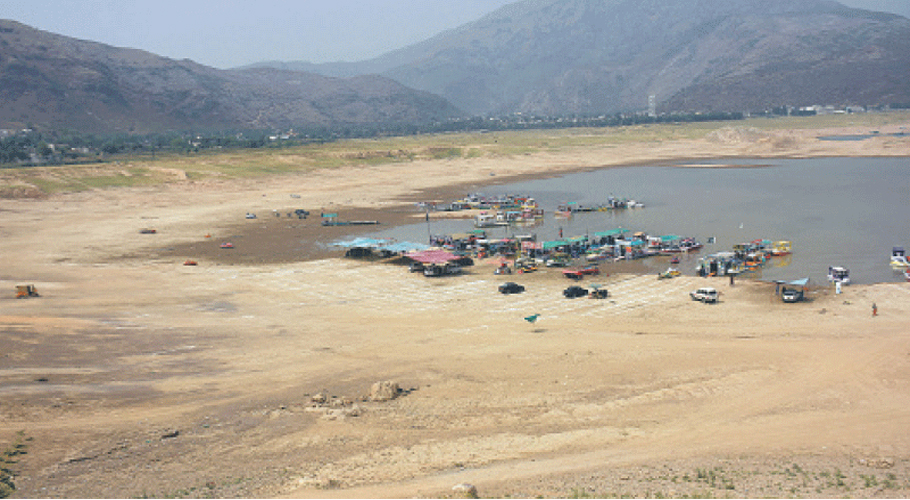
The water level in Khanpur Dam has dropped to a dangerous level, now just eight feet above the dead level, sounding the alarm of a potential crisis for the citizens of Rawalpindi and Islamabad.
Water supply to Khyber Pakhtunkhwa and Punjab for agricultural purposes was already suspended about a month ago. According to WAPDA, the storage level was recorded at 1918 feet on Saturday, which is significantly below the safe level of 1980 feet and very close to the dead level of 1910 feet. The inflow of water into the dam has reduced to just 29 cusecs, while the outflow is being maintained at 106 cusecs.
Due to the shortage of water, water sports activities in Khanpur Dam have also reached their lowest level of the year, although the place becomes a tourist attraction in summer. According to WAPDA officials, only 50 cusecs of water is being supplied to Islamabad and Rawalpindi at present, which is at risk of complete shutdown.
The dam level improves during the monsoon, but climate change, drought and ineffective management of glaciers have made the water inflow unbalanced. In June last year, the water level was 1935 feet, and the inflow was double the current rate.
Experts are blaming climate uncertainty, poor watershed management and a growing urban population for the current crisis. They say it is not just a temporary problem but a fundamental structural crisis that requires long-term planning.
Khanpur Dam not only provides drinking water to Islamabad and Rawalpindi but also irrigates agricultural lands in Haripur and parts of Punjab. With the water level reaching an all-time low in mid-June, citizens may face disruptions in water supply, pressure drop and increased dependence on tankers.
According to an official of the Capital Development Authority, water shortages are already being felt in low-lying areas, and supply timings have been reduced. If the situation does not improve, emergency conservation measures will have to be initiated.
Authorities have appealed to the public to reduce water use and avoid unnecessary waste. Activities such as washing cars, watering lawns and unnecessary cleaning of pipelines have been instructed to be avoided. At the same time, pressure is growing on government agencies to review water discharge regulations and launch awareness campaigns.