










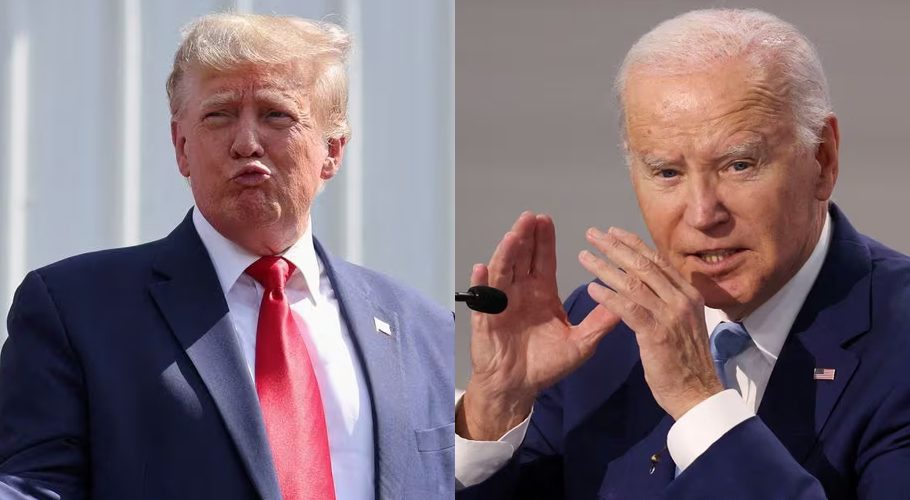
As the 2024 presidential race looms, with the likely contenders being Republican Donald Trump and Democrat Joe Biden, a growing number of Americans express a yearning for alternative, less polarizing options. The emergence of a significant market for third-party candidates, not seen since the 1990s, underscores the dissatisfaction with the unusually unpopular choices expected from the two major parties.
Against the backdrop of economic uncertainty, a deep political divide, a controversial U.S.-backed Israeli assault on Gaza, and calls for a new era of U.S. leadership, a Gallup poll reveals that 63% of U.S. adults believe that the Republican and Democratic parties are doing such a poor job that a third major party is necessary—an increase of 7 percentage points from the previous year and the highest level since 2003.
Despite facing primary challengers, both Biden and Trump are anticipated to secure their party’s nominations for 2024. Concerns persist over Biden’s age and Trump’s legal challenges, yet no third-party candidate has secured victory in modern U.S. presidential elections, although they have occasionally played spoiler roles.
A recent Reuters/Ipsos poll introduces Robert F. Kennedy Jr., an anti-vaccine conspiracy theorist and scion of the Democratic dynasty, as a potential disruptor. Supported by the “American Values 2024” SuperPac, Kennedy has raised over $17 million and garnered 20% in a hypothetical three-way race with Biden and Trump.
While Democrats worry about Kennedy’s last name and his appeal to some of their voters, Republicans fear his anti-vaccine stance and popularity among conservatives. The potential impact on the anti-Trump coalition has Democrats cautious, emphasizing the need for a united front against Trump.
Also read: Palestinian genocide: Does Israel want to seize Gaza’s multibillion dollar gas field?
Amidst this, third-party options are gaining attention, with No Labels, a bipartisan group, having raised $60 million for 2024 and qualifying for the ballot in 11 states. They seek to provide better choices and have been courting figures like former Republican Gov. Larry Hogan and U.S. Senator Joe Manchin. However, the fundraising prowess of Biden and Trump remains formidable.
As the political landscape evolves, figures like Cornel West and Jill Stein are also running as third-party candidates, but their impact is expected to be marginal. The quest for alternatives reflects a broader sentiment that Americans desire more diverse and satisfactory choices in the political arena.