








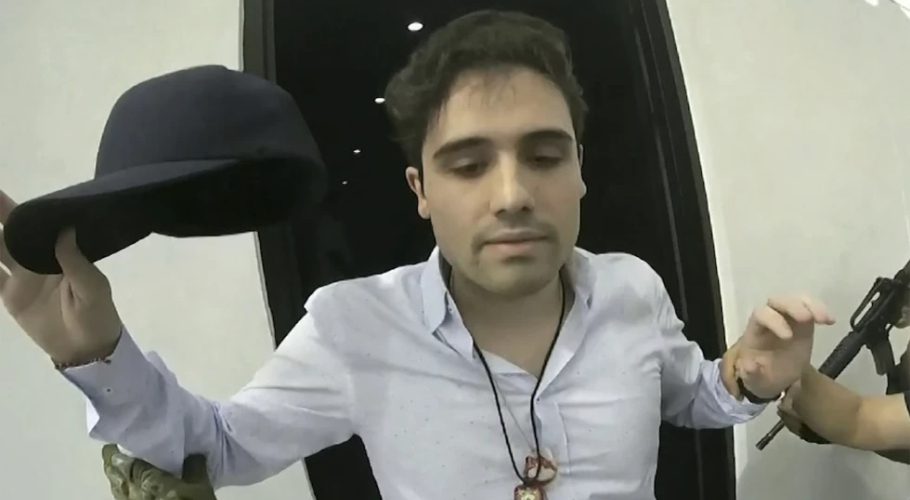
MEXICO CITY: Mexico extradited Ovidio Guzmán López, a son of former Sinaloa cartel leader Joaquin “El Chapo” Guzman, to the United States to face drug trafficking, money laundering and other charges.
“This action is the most recent step in the Justice Department’s effort to attack every aspect of the cartel’s operations,” US Attorney General Merrick Garland said in a statement.
Three years earlier, the Mexican government had tried to capture him but aborted the operation after his cartel allies set off a wave of violence in Culiacan. The arrest in January set off similar violence that killed 30 people in Culiacan including 10 military personnel.
The capture came just days before US President Joe Biden visited Mexico for bilateral talks followed by the North American Leaders’ Summit.
On Friday, Garland recognized the law enforcement and military members who had given their lives in the US and Mexico. “The Justice Department will continue to hold accountable those responsible for fueling the opioid epidemic that has devastated too many communities across the country.”
Mike Vigil, former head of international operations for the Drug Enforcement Administration, said he believed the Mexican government facilitated the extradition, because for someone of Guzmán López’s profile, it usually takes at least two years to win extradition as attorneys make numerous filings as a delaying tactic.
“This happened quicker than normal,” Vigil said, noting that some members of the US Congress had raised the idea of US military intervention if Mexico did not do more to stop the flow of drugs. Vigil dismissed that idea as “political theatre,” but suggested it added pressure on Mexico to act.
READ MORE: Mexican druglord Chapo’s wife released from US prison
Homeland Security Adviser Liz Sherwood-Randall made multiple visits to Mexico this year to meet with President Andrés Manuel López-Obrador, most recently last month.
In April, US prosecutors unsealed sprawling indictments against Guzmán and his brothers, known collectively as the “Chapitos”. They laid out in detail how following their father’s extradition and eventual life sentence in the US, the brothers steered the cartel increasingly into synthetic drugs like methamphetamine and the powerful synthetic opioid fentanyl.
The indictment unsealed in Manhattan said their goal was to produce huge quantities of fentanyl and sell it at the lowest price. Fentanyl is so cheap to make that the cartel reaps immense profits even wholesaling the drug at 50 cents per pill, prosecutors said.
López Obrador has described his country as a transit point for precursors coming from China and bound for the US, despite assertions by the US government and his own military about fentanyl production in Mexico. He blames a deterioration of family values in the US for the high levels of drug addiction in that country.
Fentanyl has become a top priority in the bilateral security relationship. An estimated 109,680 overdose deaths occurred last year in the United States, according to numbers from the Centers for Disease Control and Prevention. About 75,000 of those were linked to fentanyl and other synthetic opioids.
Mexico’s fentanyl seizures typically come when the drug has already been pressed into pills and is headed for the US border. US prosecutors allege much of the production occurs in and around Culiacan, where the Sinaloa cartel exerts near complete control.