





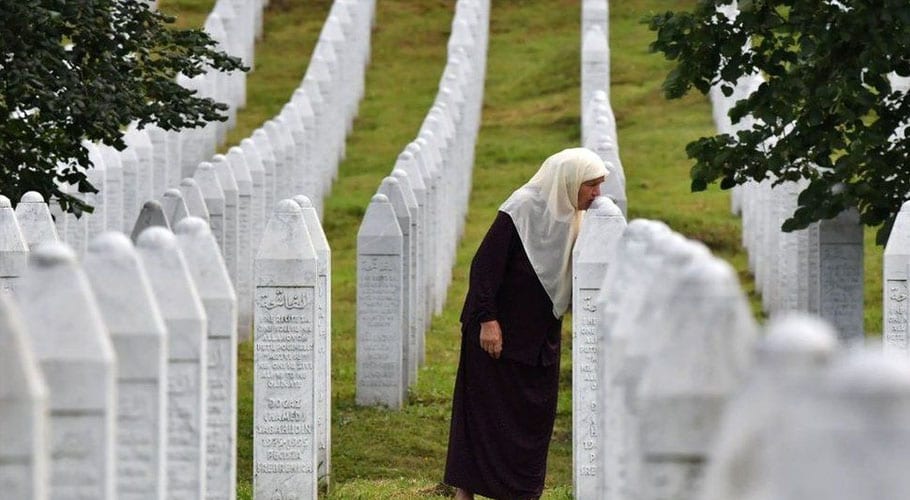
SREBRENICA: Bosnian Muslims on Saturday mark 25 years since the Srebrenica massacre, the worst atrocity on European soil since World War II, with the memorial ceremony sharply reduced as a result of the coronavirus pandemic.
Organisers said the number of people attending the anniversary is likely to be lower than usual because of lockdown measures aimed at stemming the spread of COVID-19.
The remains of nine victims identified over the past year will be laid to rest at the memorial cemetery in Potocari, a village just outside Srebrenica that served as the base for the UN protection force during the conflict.
On July 11, 1995, after capturing the ill-fated town, Serb forces killed more than 8,000 Muslim men and boys in Srebrenica in a few days.
The episode — labelled as genocide by two international courts — came at the end of a 1992-95 war between Bosnia’s Croats, Muslims and Serbs that claimed some 100,000 lives. So far, the remains of nearly 6,900 victims have been found and identified from more than 80 mass graves.
Bosnian Serb wartime military chief general Ratko Mladic was sentenced to life in prison by a UN court in 2017 over war crimes including the Srebrenica genocide. He is awaiting the decision on his appeal. Radovan Karadzic, another Bosnian Serb wartime political leader, was also sentenced to life in prison.
The Srebrenica massacre is the only episode of the Bosnian conflict to be described as genocide by the international community.
Bosnian Muslims are realising the scale of the atrocity is a necessity for lasting peace, but for most Serbs in both Bosnia and Serbia, the use of the word genocide remains unacceptable.
In the run-up to the anniversary, Serbian President Aleksandar Vucic described Srebrenica as “something that we should not and cannot be proud of”, but he has never publicly uttered the word “genocide”.
Several thousand Serbs and Muslims live side by side in impoverished Srebrenica, a lifeless town in eastern Bosnia with just a few shops in its centre.
On Friday, the town’s Serbian mayor Mladen Grujicic — who was elected in 2016 after a campaign based on genocide denial — said that “there is new evidence every day that denies the current presentation of everything that has happened”.
A Muslim member of Bosnia’s joint presidency, Sefik Dzaferovic, said: “We will tirelessly insist on the truth, on justice and on the need to try all those who have committed this crime”.
“We will fight against those who deny the genocide and glorify its perpetrators,” he said at the memorial centre where he attended a collective prayer.
In order to avoid large crowds on Saturday, organisers have invited people to visit the memorial centre over the whole month of July.
ADVERTISEMENT