










NEW YORK: The International Energy Agency (IEA) on Wednesday projected that global oil demand will fall by a record amount this year as lockdown measures imposed to curb the coronavirus outbreak bring the economy to a virtual halt.
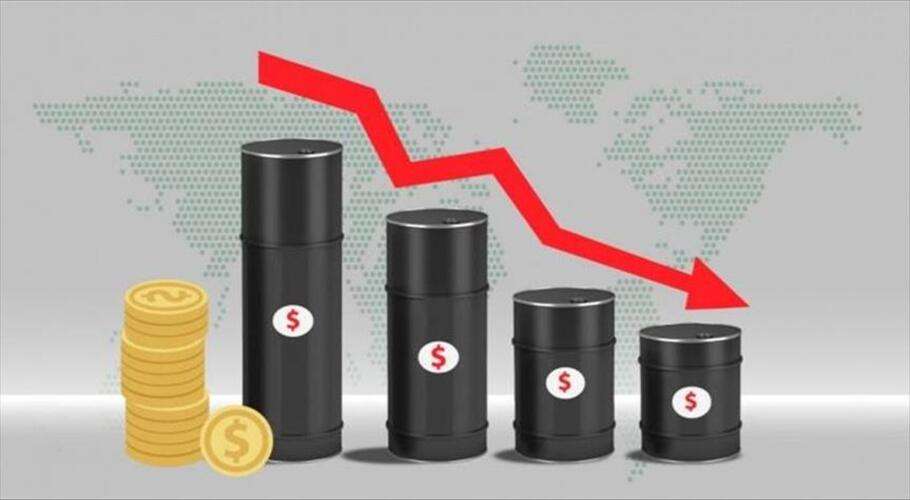
The overall demand will fall by 9.3 million barrels per day (mbd) in 2020, with April alone down 29 mbd from a year earlier to levels last seen in 1995, the IEA said in its latest monthly report. However, measures taken to bolster the global economy and to reduce oil supply should allow a gradual recovery in the second half of the year, it said.
The International Monetary Fund (IMF) warned that the coronavirus pandemic is pushing the world into its deepest recession in a century, with economic output expected to shrink three percent. It said there could be a strong rebound in 2021, with growth of 5.8 percent, but cautioned any forecasts must be tentative.
The IEA said “the global economy is under pressure in ways not seen since the Great Depression in the 1930s,” warning that even if restrictions are eased later this year, the 2020 fall in demand of 9.3 mbd will erase “almost a decade of growth.”
On the positive side, several governments have launched massive stimulus programmes costing trillions to tide their economies through the worst of the crisis. “We are also seeing measures being taken to tackle the oil market crisis,” the IEA noted, referring to an OPEC deal on the weekend to cut production by an initial 9.7 mbd.
The IEA has urged major consumers and producers to work together through G20 to mitigate the impact on market stability in light of the unprecedented depth of the crisis. G20 countries have agreed to support the cuts which could an unprecedented reduction of 20 mbd in output
The IEA said that actions by OPEC and G20 will not rebalance the market immediately. “But by lowering the peak of the supply overhang and flattening the curve of the build-up in stocks, they help a complex system absorb the worst of this crisis, whose consequences for the oil market remain very uncertain in the short term,” it said.
For April, the IEA expects a fall in demand of up to 29 mbd year-on-year, followed by 26 mbd in May and 15 mbd in June. The IEA warned that there is no feasible agreement that could cut supply by enough to offset such demand losses.
The IEA said it was possible that if production falls sharply, reserves are built up and economies recover, and then the second half of 2020 will see demand exceed supply. It said the current demand and supply estimates imply a stock draw of 4.7 mbd in the second half. Oil industry capital expenditure this year was expected to fall by 32 percent to $335 billion, the lowest level for 13 years, the IEA added.
ADVERTISEMENT