










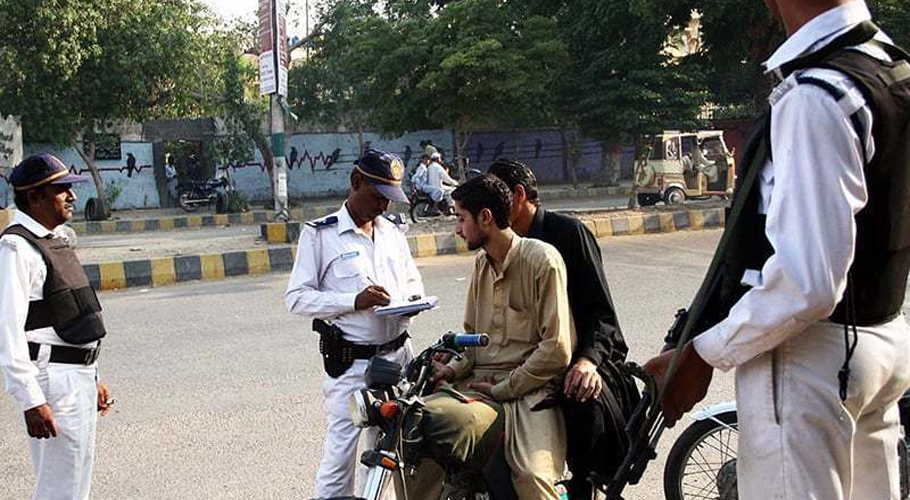
The newly launched e-challan system in Karachi has dramatically increased traffic fines, issuing over 6,000 penalties in just two days and accumulating more than Rs35 million in fines. The fines mostly target over speeding, tinted windows, failure to wear seat belts, signal violations, and motorcyclists riding without helmets.
A glaring issue is the massive disparity in traffic fines between Karachi and Lahore, raising questions about why Karachi’s citizens face significantly harsher penalties.
For instance, a motorcyclist driving the wrong way in Karachi is fined Rs25,000, compared to only Rs2,000 in Lahore. Similarly, the fine for signal violations is Rs5,000 in Karachi but just Rs200 in Lahore.
This discrepancy has sparked public debate: why are Karachi residents treated so differently? Is this gap justified, or does it add undue pressure on Karachi’s commuters already struggling with heavy traffic?
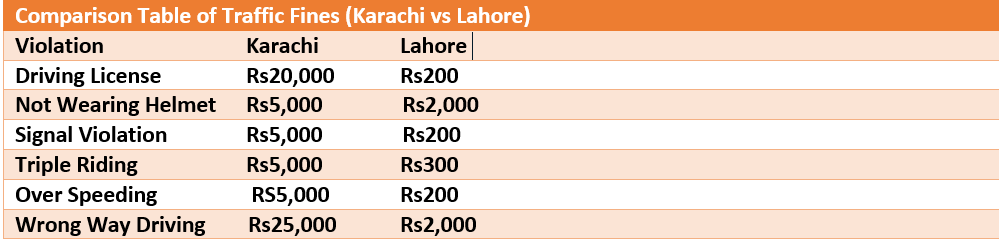
The contrast between Karachi and Lahore’s fine structure begs a serious question: Why does Karachi’s new traffic system impose such steep penalties? Karachi citizens deserve answers about this punitive approach and a fair, balanced system that helps improve road safety without placing an overwhelming financial burden on commuters.