










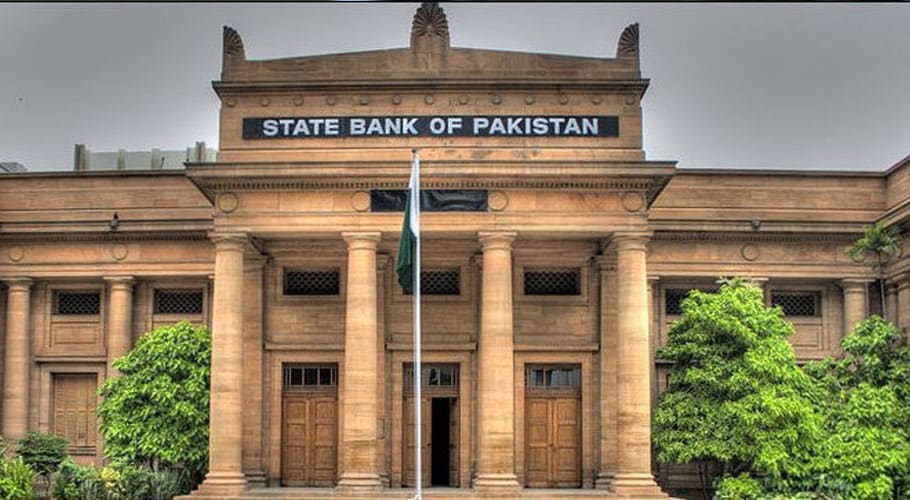
KARACHI: The State Bank of Pakistan today released its Second Quarterly Report for FY2020 on the State of Pakistan’s Economy.
According to the report, the stabilization efforts and regulatory measures yielded notable improvements during the first half of FY20.
The report stated that the current account deficit contracted to a six-year low, foreign exchange reserves increased, the primary budget recorded a surplus, and core inflation eased.
“The export-based manufacturing showed signs of traction and construction activities picked up, indicating that the economy was on the path of recovery,” SBP opined.
Regarding the fiscal sector, the report noted that the primary budget recorded a surplus, while the fiscal deficit was contained during H1-FY20 compared to the same period last year.
“This was due to significant growth in revenues despite a slowdown in the economy and the compression in imports,” report added.
The report further highlighted the challenges pertaining to the agriculture sector. The sector appears less resilient to challenges like constrained water availability and climate change.
The cotton crop, in particular, was hit by unfavorable weather, pest attacks and low water availability. Though the prospects for the wheat crop and livestock are encouraging, the decline in cotton production is likely to undermine the agriculture sector’s performance in FY2020.
On the inflation front, the report noted that the inflationary pressures continued to build up throughout the first half of FY2020.
While the non-food-non-energy (NFNE) inflation exhibited stability amid subdued demand conditions in the economy, food inflation surged steeply in both the quarters.
The Special Section of the report identifies that the state of competition in the domestic economy as an area needing the attention of the policymakers. The section argues that the overall competitive environment in Pakistan has been unfavorable for productivity enhancement and growth.
The report further notes that the global and domestic spread of COVID-19 has brought an exceptional set of challenges for the country.
The government and the SBP have therefore taken a number of measures to mitigate the adverse impacts of COVID-19 on the economy. These include sizable fiscal spending programs, tax reliefs, and incentives to the construction industry.
ADVERTISEMENT