










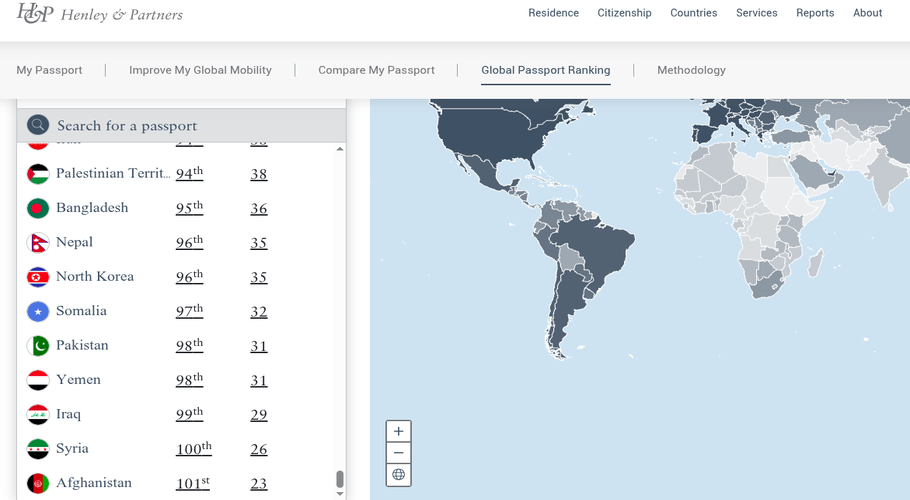
ISLAMABAD: At a time when government ministers and functionaries continue to project Pakistan as the “sole mediator” in efforts to defuse tensions between the United States and Iran, the country’s passport remains among the weakest globally, ranking fourth from the bottom in the latest Henley & Partners Global Passport Index.
According to the ranking, Pakistani citizens can access only 31 destinations without a prior visa, placing the country at 98th position — alongside Yemen and just above Iraq, Syria, and Afghanistan. This stark reality underscores the limited global mobility afforded to Pakistanis, despite repeated claims of image‑building and international recognition by official quarters.
The government’s narrative of diplomatic centrality — amplified through press conferences and public statements — contrasts sharply with the lived experience of ordinary citizens, who continue to face severe restrictions in international travel.
Analysts note that while Islamabad’s mediation efforts in regional conflicts may attract headlines, they have yet to translate into tangible improvements in Pakistan’s global standing or ease of movement for its people.
Critics argue that the emphasis on misleadingly “positive‑type” projection has created a widening gap between rhetoric and reality. “The passport ranking is a mirror to our actual global position,” one observer remarked, adding that the disconnect between diplomatic bragging and practical outcomes erodes public trust.
For many Pakistanis, the latest ranking is not merely a statistic but a reminder of the challenges they face in pursuing education, employment, and opportunities abroad — challenges that remain unaddressed even as the state touts its role on the world stage.