










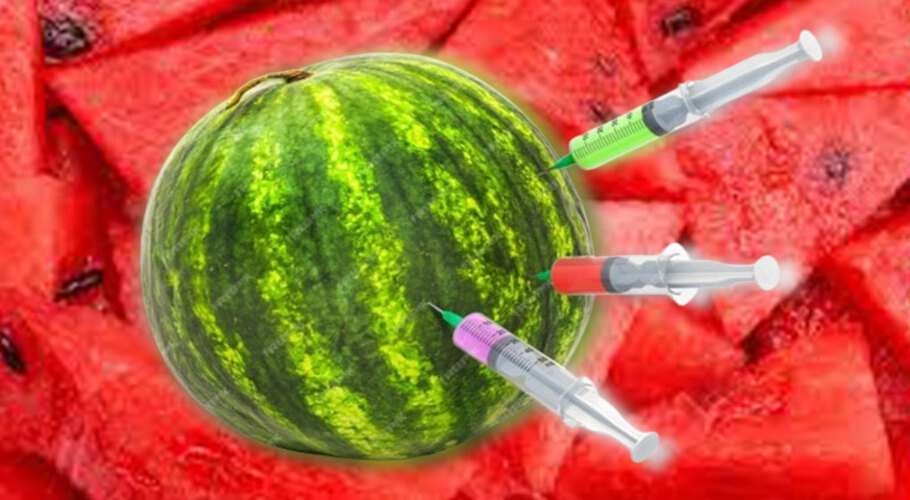
With Karachi’s temperature hitting 39°C+ and roadside stalls on every corner, watermelon is everywhere. But so are fraudsters. Some vendors inject banned red dye like erythrosine or dissolve artificial sweeteners to make underripe fruit look “lal surkh” and taste extra sweet. Others cut a “sample piece” to lure you in — but that same exposed slice sits in the heat, dust, and traffic fumes for hours.
Here’s how to protect yourself:
1. Don’t fall for the “sample piece” trap
That glossy, bright-red triangle the vendor hands you? It’s often from a different, injected melon. And once cut, it’s been sitting uncovered on a “thela” since morning, collecting bacteria. Always buy a whole watermelon. Ask the vendor to cut yours fresh — and watch him do it.
2. Spot the dye injection
Before he cuts, check the rind for tiny pinholes or dried puncture marks, usually near the stem. After cutting, look at the flesh: natural watermelon is deep pink with uneven color. If it’s an unnatural, uniform neon red that “bleeds” color onto the plate, or if the white part near the rind is also tinted pink, it’s likely dyed. Real juice shouldn’t stain your hands red.
3. Use your nose and tongue
Fresh watermelon smells faintly sweet. If it smells oddly chemical, sour, or like “spirit“, skip it. Taste a small piece from the melon you bought: bitter, overly sharp sweetness, or a fizzy feel means saccharin injection or fermentation.
4. Hygiene in this heat
Never buy pre-cut fruit from stalls without ice or a fridge — in Karachi’s humidity, bacteria doubles every 20 minutes. At home, wash the whole melon, refrigerate cut pieces within 2 hours, and finish within 3 days.
The thing is, buy whole, watch the cut, and trust your senses. If the color looks too good to be true on Tariq Road or Burns Road, it probably is.