










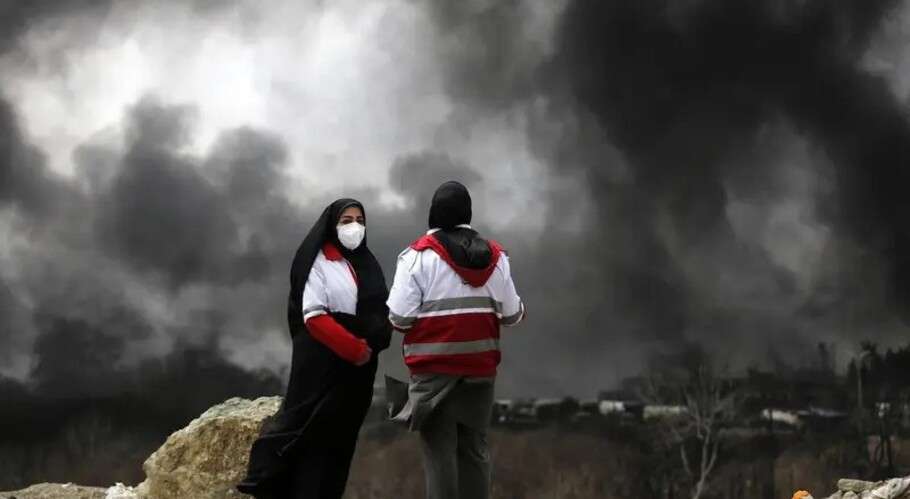
ISLAMABAD: Pakistan, a certified victim of climate change, may be left with no other option but to seek international assistance as toxic plumes from bombed oil facilities in the Middle East are threatening to drift into its western regions, compounding health and humanitarian crises already straining the country.
The Pakistan Meteorological Department (PMD) has warned that winds could carry pollutants, smoke, and particles from Iran’s damaged refineries into Balochistan and Khyber Pakhtunkhwa.
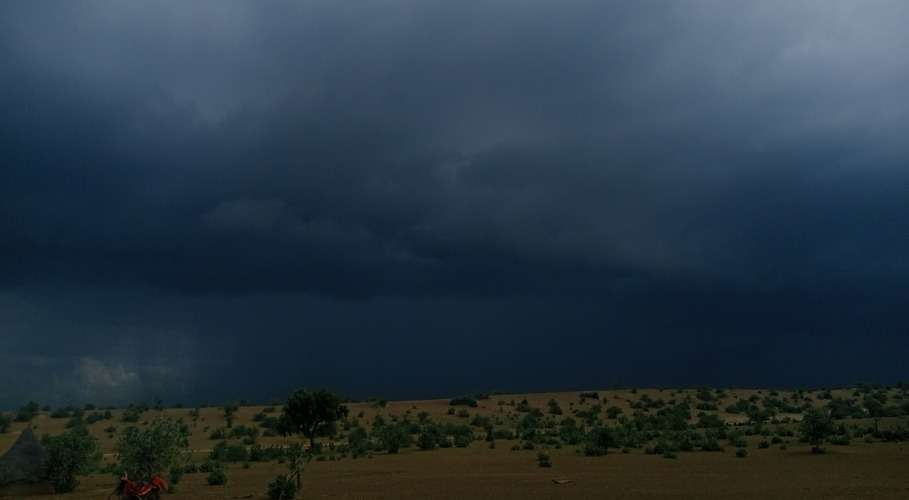
Officials fear the phenomenon—dubbed “black rain” in Tehran—may worsen respiratory illnesses, particularly among vulnerable groups such as children, the elderly, and those with pre-existing conditions. Alerts highlight the risk of toxic or acidic rainfall as polluted clouds move northeast through Afghanistan toward Pakistan.
It is pertinent to mention here that since the outbreak of the US‑Iran war on February 28, the region has witnessed relentless bombardments across Iran, Lebanon, Iraq, and Syria, with strikes on Tehran’s oil depots producing massive toxic plumes.
The conflict, which continues till to date, has rapidly escalated into a regional crisis, drawing in multiple Middle Eastern states. Analysts estimate the United States is burning through roughly $1.4 billion per day on operations and munitions, pushing cumulative costs into the tens of billions of dollars within the first two weeks alone, underscoring both the intensity of the fighting and the staggering financial toll.
The health warnings come as Pakistan, despite contributing less than one per cent to global greenhouse gas emissions, remains among the world’s most climate-affected nations. According to the Germanwatch Global Climate Risk Index, the country has repeatedly ranked near the top for extreme weather impacts, topping the list in 2022 after catastrophic floods and remaining within the top 10–20 in long-term assessments. Recent updates for 2025 and 2026 again placed Pakistan among the most severely affected, underscoring recurring floods, heatwaves, droughts, and glacial events.
Officials and analysts suggest Islamabad may leverage the health hazards and humanitarian disruptions stemming from the US-Iran conflict to press for additional aid. Potential sources include global bodies such as the United Nations and World Health Organization, as well as key players in the conflict, particularly the United States and its allies including Saudi Arabia. Pakistan’s strategic positioning and history of aid dependency are expected to shape its appeal.
It may be noted here that the ongoing conflict in the Middle East has already disrupted humanitarian supply chains. Restrictions in the Strait of Hormuz have paralyzed routes through Dubai, stranding millions of dollars’ worth of medical shipments, and WHO reports more than $18 million in supplies blocked, including $1.6 million in laboratory materials critical for polio eradication campaigns in Pakistan and Afghanistan. Officials warn vaccination drives and disease surveillance could also be severely undermined.
Meanwhile, record fuel price spikes linked to Hormuz disruptions have triggered panic buying and unrest at petrol stations across the country, while rising energy costs are cascading into food, transport, and electricity prices, deepening the strain on households already facing austerity measures. Regional instability has further displaced populations near the Afghan border, adding pressure to fragile health systems and humanitarian networks.
With cross-border pollution risks mounting alongside supply shortages and economic shocks, Pakistan believes its case for urgent international support is expected to gain traction in the coming weeks.