










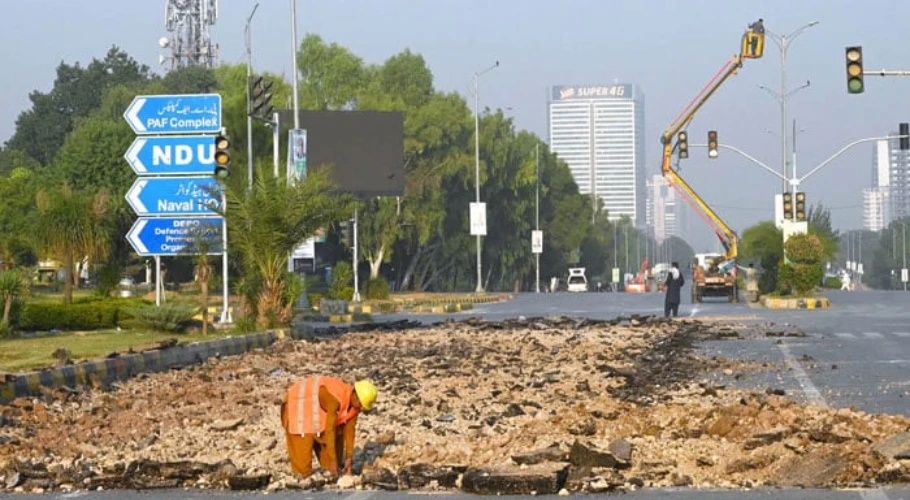
Expenditures under the Public Sector Development Program (PSDP) have slowed down in the first four months of the current financial year, as the government is exercising strict control over the release of funds to demonstrate fiscal discipline to the International Monetary Fund (IMF).
According to a report, a total of Rs 76 billion was spent on the PSDP from July to October of the 2025-26 fiscal year, which is only 7.6% of the total annual allocation of Rs 10 trillion. This is lower compared to the previous fiscal year, even though the Planning Commission had approved the release of Rs 330 billion, of which the actual spending remained very low.
This situation emerged at a time when the government recorded a 1.6% budget surplus in the first quarter of the financial year. This was made possible due to State Bank profits, heavy petroleum levy collections, and the closure of hundreds of projects under the IMF program, allowing resources to be focused on completing key strategic projects in their final stages of development.
According to data released by the Ministry of Planning and Development on Wednesday, excluding corporations, approximately 35 ministries and divisions collectively spent only Rs 54 billion, which is just 8% of their total budget of Rs 682 billion.
On the other hand, corporations, including the power sector and the National Highway Authority, spent only Rs 22 billion (6.9%) against their annual allocation of Rs 318 billion. The power sector’s expenditure was merely Rs 1.9 billion, which is only 2% of its Rs 91 billion budget.
Under the mechanism set by the Ministry of Finance, the government is supposed to release 15% of the budget in the first quarter, 20% in the second, 25% in the third, and 40% in the final quarter, so that any potential shortfall in revenue can be adjusted by cutting the development budget while maintaining the IMF’s prescribed fiscal targets.
Under this system, the Planning Commission claimed that it approved the release of Rs 330.4 billion for federal ministries over four months, which is 33% of the annual target and even higher than the Ministry of Finance’s instructions. However, in reality, only Rs 76 billion, i.e., 7.6%, was spent.