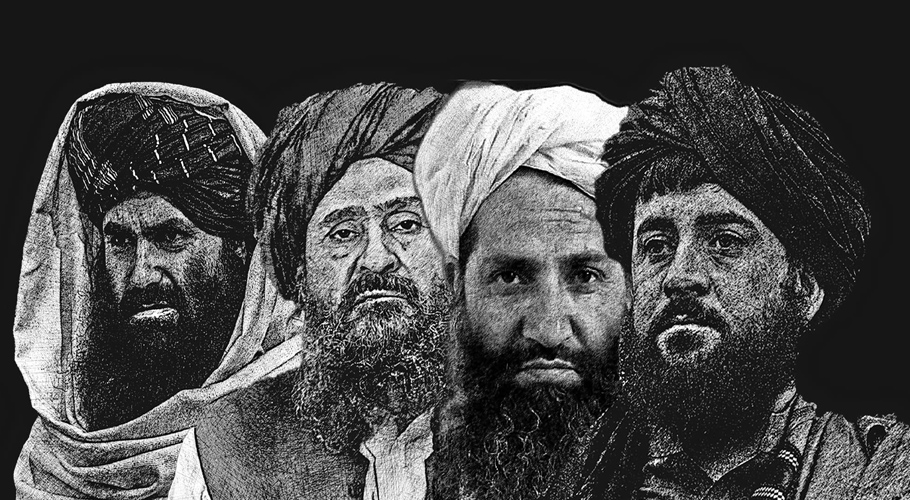
The Taliban government in Afghanistan is facing an intensifying internal power struggle, with sharp divisions emerging between two dominant factions — the Kandahari group and the Haqqani network — whose ideological visions and policy approaches differ significantly.
Kandahari Group
According to sources, the Kandahari faction is led by Supreme Leader Mullah Hibatullah Akhundzada, with key allies Mullah Yaqoob (Minister of Defense) and Amir Khan Muttaqi (Minister of Foreign Affairs).
This group combines religious conservatism with Pashtun nationalism and wields considerable influence in the southern provinces of Kandahar, Helmand, and Nimroz.
Political analysts say the Kandahari leadership adheres to hardline interpretations of Sharia, reflected in policies such as bans on women’s education, media restrictions, and discrimination against ethnic minorities.
Efforts by some within this group to strengthen ties with India have further deepened internal tensions within the Taliban.
Haqqani Network
The Haqqani Network, founded in the 1980s by Jalaluddin Haqqani, is widely regarded as the most organized and militarily powerful faction within the Taliban.
Its current chief, Sirajuddin Haqqani — serving as the Taliban’s Minister of Interior — commands respect for his discipline and tactical expertise.
The network maintains its own training facilities, weapons depots, and financial resources, with strongholds in Khost, Paktia, Paktika, and Logar provinces. It views itself as the operational backbone of the Taliban administration.
The Haqqani faction is seen as more pragmatic and relatively aligned with Pakistan, and it has expressed support for women’s education and employment, often criticizing the Kandahari group’s rigid stance.
However, the growing dominance of the Kandahari faction has weakened the Haqqani network’s influence, and reports suggest Sirajuddin Haqqani has recently relocated from Kabul to his stronghold in eastern Afghanistan.
Ethnic and Religious Tensions
Afghanistan’s deep-rooted ethnic divides have also become a pressing challenge for the Taliban government.
Non-Pashtun communities — including Tajiks, Uzbeks, and Hazaras — increasingly feel marginalized under a Pashtun-centric administration.
The Tajik resistance movement, led by Ahmad Massoud, continues to challenge the Taliban’s central authority.
Religious rifts are also widening.
The Taliban have imposed tight surveillance and restrictions on Salafi scholars in Kunar and Nuristan, leading to growing discontent. Reports indicate that at least 30 Salafi clerics have been killed under suspicious circumstances, fueling recruitment for Islamic State Khorasan Province (ISKP).
Analysts Warn of Renewed Civil Conflict
Political observers warn that the factional rivalry within the Taliban could push Afghanistan back toward civil war.
The Kandahari group’s extremism, the Haqqani network’s diminishing clout, the marginalization of minorities, and the ban on women’s education — all pose severe threats to Afghanistan’s unity.
Experts caution that unless the Taliban pursue an inclusive political framework and national reconciliation, the country may soon descend into another phase of internal conflict, with repercussions extending beyond Afghanistan’s borders.