










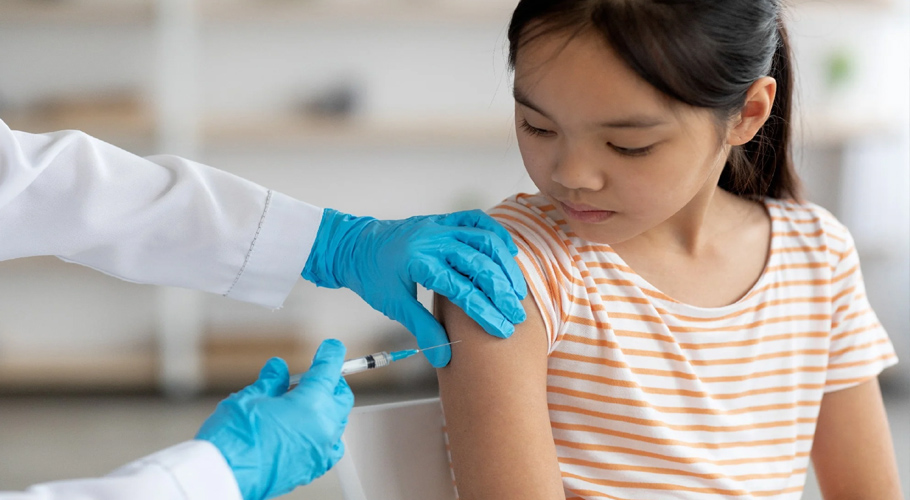
From September 15, 2025, a nationwide HPV (human papillomavirus) vaccination campaign — aimed at preventing cervical cancer — has begun across Pakistan, running until September 27. Under the drive, girls aged 9 to 14 are being immunized.
As soon as the campaign was launched, social media erupted with mixed reactions and conspiracy theories, causing worry among many parents and guardians. This report reviews the need and objectives of the vaccination campaign, examines how necessary, effective and safe the vaccine is, and addresses who is behind the initiative — drawing on experts’ opinions.
Before proceeding, it is important to understand: what is cervical cancer? Who does it affect, and what is its prevalence in Pakistan?
What is cervical cancer?
In simple terms, cervical cancer is a malignancy that affects the lower part of a woman’s uterus (the cervix), the canal that connects the uterus to the vagina. The cervix functions as the birth canal during delivery and is also the passage through which menstrual blood exits the body.
How does cervical cancer develop?
Cancer itself is not contagious like a cold or viral fever — you do not catch it by touching or sharing food. However, cervical cancer is strongly linked to infection with certain types of human papillomavirus (HPV), which can be transmitted sexually.
Experts say HPV infection can occur even after a single sexual encounter. Early sexual activity, including within marriage, is a known risk factor. Prolonged use of certain contraceptives has also been associated with increased risk. Some clinicians have raised concerns about low-quality sanitary products, though the dominant scientific evidence links cervical cancer primarily to persistent HPV infection.
Cervical cancer in Pakistan
According to studies, cervical cancer is the third-most common cancer among Pakistani women and ranks second among cancers affecting women aged 15–44. Reports estimate roughly 5,008 new cervical cancer cases occur in Pakistan each year, with more than 3,197 resulting deaths.
Read more: Pakistan begins HPV vaccination campaign to curb cervical cancer
Conspiracy theories
When the federal campaign was announced, familiar conspiracy narratives quickly resurfaced online. The most widespread false claims include that the vaccine causes infertility.
Another persistent claim alleges that wealthy Western individuals — notably Bill Gates — are funding the program to reduce Muslim populations. Others assert that mass infertility occurred in African countries after HPV vaccination and that legal actions have been filed against funders; these claims lack credible evidence.
The facts
First: Does the HPV vaccine cause infertility? No. The World Health Organization and major public-health authorities have made clear that the HPV vaccine is designed to prevent infection with high-risk HPV types that cause cervical cancer.
It has no adverse effect on fertility or reproductive health. Millions of girls worldwide have received the vaccine, and extensive safety monitoring supports its safety profile.
Second: Is Bill Gates funding the campaign to harm communities? No. The global HPV vaccination efforts are coordinated and supported by international organizations such as the United Nations, the World Health Organization (WHO) and UNICEF, with funding and technical support from a range of global donors. Allegations of a covert population-control agenda are unfounded.
Third: Claims about mass infertility in Africa are false. No reliable evidence supports such assertions, and independent investigations have not substantiated those rumors.
Is Pakistan the only country running this campaign?
No. This is a UN-backed global initiative. Pakistan is reportedly the 150th country to begin such a campaign; the vaccine program has already been implemented in 149 countries.
UNICEF says HPV vaccination programs operate in more than 140 countries, including Saudi Arabia and Qatar. In Pakistan, the national vaccination campaign from September 15–27, 2025 covers Punjab, Sindh, Islamabad and Azad Jammu & Kashmir, targeting girls aged 9–14.
How effective and safe is the vaccine?
Experts say the HPV vaccine is a powerful preventive tool: screening and vaccination together can dramatically reduce cervical cancer incidence. Vaccination can prevent the HPV infections that cause the majority of cervical cancer cases.
Broadly accepted research shows that vaccination can prevent around 70–90% of cases attributable to vaccine-covered HPV types, and large-scale programs have demonstrated strong safety records.