










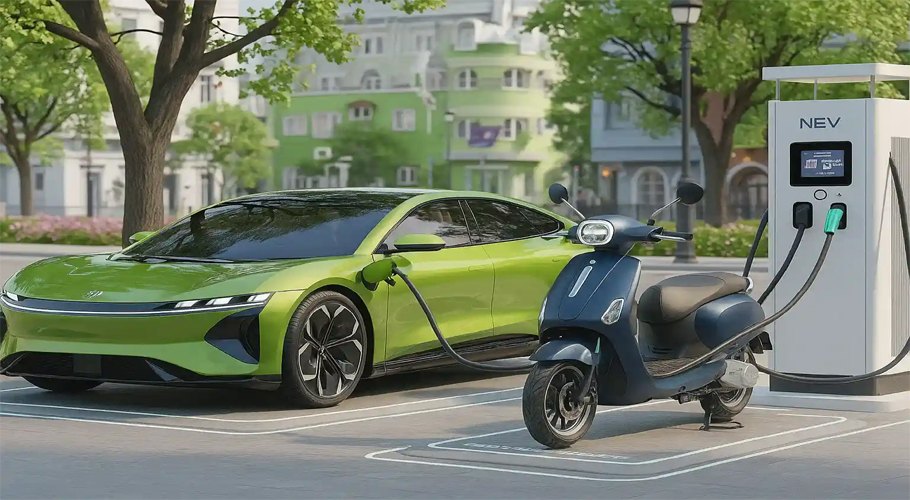
Pakistan has introduced the National Electric Vehicle (NEV) Policy 2025–2030, an ambitious roadmap designed to curb emissions and transition the transport sector toward sustainability. The policy sets clear targets: 30 percent of all new vehicle sales to be electric by 2030, 50 percent by 2040, and full conversion by 2060.
Core Objectives
- Reduce greenhouse gas emissions and improve air quality.
- Lower dependence on imported fossil fuels.
- Promote local manufacturing of electric vehicles and components.
- Enhance public health through reduced air pollution.
The plan covers all segments, including two- and three-wheelers, buses, trucks, and passenger cars. The transition is expected to save billions of liters of fuel, strengthen energy security, and accelerate the growth of green technologies within Pakistan.
Subsidies and Consumer Incentives
To close the price gap with conventional vehicles, the policy introduces a cost-sharing subsidy scheme:
- Rs65,000 ($230) for two-wheelers.
- Rs400,000 ($1,420) for three-wheelers.
For four-wheelers and commercial vehicles: support up to Rs15,000 ($53) per kWh of battery capacity, or five percent of the invoice value, whichever is lower.
The policy emphasizes rapid adoption of intra-city two- and three-wheelers, which serve low-income groups and represent about 87 percent of Pakistan’s vehicle population.
Charging Infrastructure
The policy envisions the installation of 3,000 charging stations nationwide by 2030. Within six months, 40 fast chargers will be deployed along motorways and highways. Oil marketing companies will be required to convert 10 percent of their filling stations into EV charging points. A national tariff of Rs39.7 ($0.14) per kWh has been set for commercial charging.