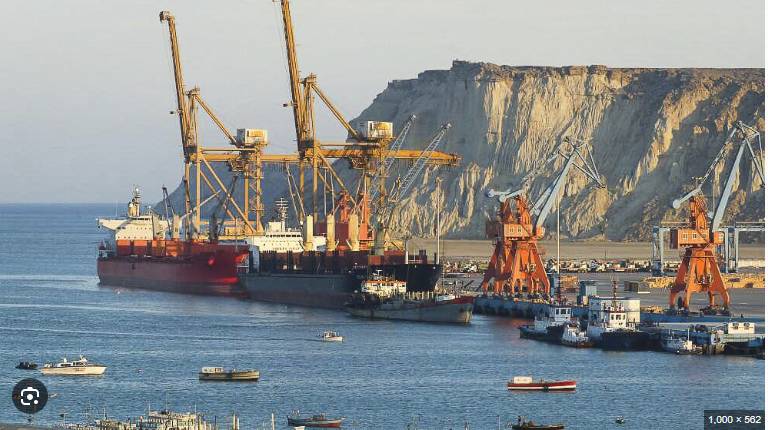











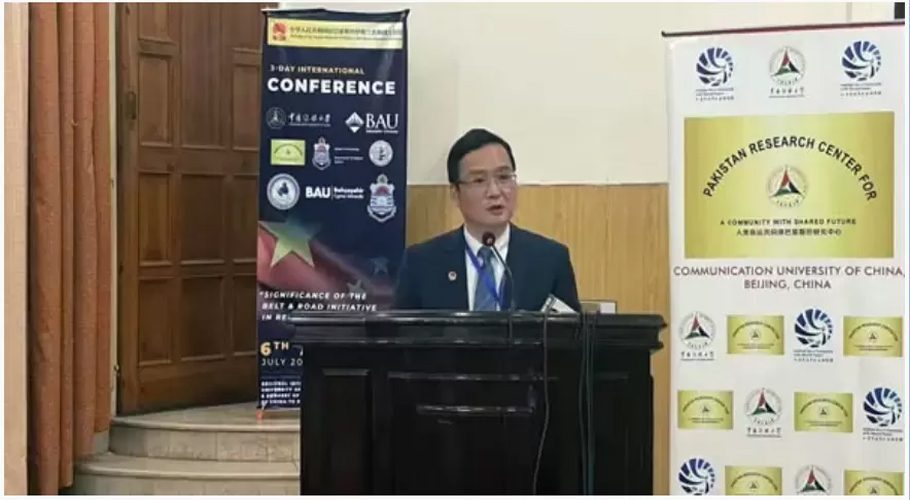
LAHORE: Zhao Shiren, the Chinese Consul General in Lahore, said that four corridors were being added to the China-Pakistan Economic Corridor (CPEC), as both Islamabad and Beijing agreed to it during Prime Minister Shehbaz Sharifs recent visit to the country.
Speaking at an event here, he termed Sharif’s maiden visit to China as the Prime Minister “unprecedentedly constructive and successful” as both sides agreed to adding four new corridors — digital, industrial, green and health — to the CPEC project, reported Dawn news.
In response to inquiries regarding the “slowed down” progress made on the CPEC recently, the diplomat said he would not hold China or Pakistan responsible but could promise [Pakistanis] that things would pick up speed going forward.
He claimed that while the project would be advantageous for both China and Pakistan, the latter would gain more from it. He urged Pakistanis to take ownership of the project because they were in charge, saying that Chinese assistance would only serve to make it easier for them to do so.
He urged Pakistanis that being on the driving seat, they should take ownership of the project, while Chinese could only facilitate them in this regard.
Foreign affairs expert Muhammad Mahdi lamented that the first phase of the CPEC could not be completed because of “ineptness” of the previous (PTI) government.
Regarding the anti-CPEC propaganda, he claimed that the West is now on board with the initiative, while premier Sharif made it clear during a reception hosted by the US ambassador that Islamabad would support any nation that stepped forward to assist Pakistan at this crucial time.
He claimed that China has so far donated Rs30 billion to flood victims, the most of any country, and that it expects to announce the largest aid package for Pakistan at the Paris Club meeting.
The chairman of an agricultural research organization, Jawed Salim Qureshi, emphasized the importance of knowledge transfer in the agricultural industry, particularly for important commodities like cotton, wheat, and maize, in order to increase output and lower production costs for local farmers.
He claimed that outdated seeds of various crops were failing to produce the intended results and that new ones needed to be introduced after comparing the statistics on the significant agricultural productivity gap between China and Pakistan. The private sector did not need subsidies, but rather facilitation, he added, so if there were any barriers to business-to-business cooperation, they should be investigated in order to increase local farm output.