










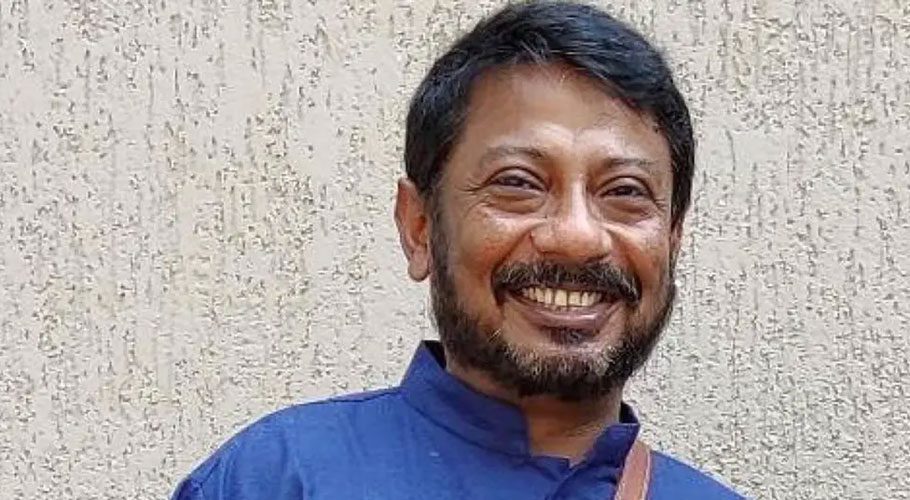
NEW DELHI: Indian army has blocked Critically-acclaimed Indian filmmaker Onir’s new film, which is inspired by a gay army major who resigned and came out in a blaze of publicity.
Prime Minister Narendra Modi’s Hindu-nationalist government has been repeatedly accused of ramping up censorship since coming to power eight years ago. In 2020, it issued an order advising filmmakers to seek prior clearance for any military-themed script, a decision described by free speech campaigners unconstitutional in the world’s largest democracy.
Onir, who uses only one name, is gay himself and was among the first major Bollywood figures to openly acknowledge his sexuality. He is known for his movies about the lives of socially marginalised groups.
The filmmaker’s creative eye was caught by the case of Major J. Suresh, who hit national headlines in 2020 after he quit the army and announced: “I’m gay — and I’m very proud that I’m gay.”
The ex-army officer had served in some of India’s most turbulent regions including Kashmir. He later gave a ground-breaking interview on national television that went viral in the socially conservative country.
Onir’s script, We Are, narrates four stories, those of a trans woman, a lesbian, a bisexual man and a fictitious account of love between a gay officer and a Kashmiri boy.
View this post on Instagram
However, when he approached the defence ministry for a “no objection certificate” he was rejected. “They told me the fact that I have portrayed the army man as gay is illegal,” the filmmaker told AFP.
However, Onir pointed out that movies, where officers fall in love with women, were never rejected. “Why is one’s sexuality being made the barometer for one’s patriotism or ability to defend the nation?” he asked.
“Everyone seems to get offended over the slightest things but what about the artists’ creativity or sentiments?” he added. Several of his films have addressed gay themes, including My Brother…Nikhil, the story of Indian swimming champion Dominic D’Souza who was arrested in the 1980s after testing HIV positive.
India only decriminalised gay sex in a 2018 Supreme Court ruling, but both homosexuality and adultery remain punishable offences under the Army Act, with jail terms of up to 10 years.
The country’s junior defence minister Ajay Bhatt confirmed to parliament last week that Onir’s film had been refused permission because of “the portrayal of a romantic relationship between an army soldier serving in Kashmir and a local boy which casts the Indian army in poor light and raises security concerns”.
He insisted the pre-screening process was neither unconstitutional nor a denial of free speech, and said the government considered factors including national security, popular sentiment and the image of the armed forces to ensure the military “isn’t depicted in a manner which brings disrepute”.
I Am combined four stories examining same-sex relationships and other taboo subjects such as sperm donation and child abuse. It was named the best Hindi film in the 2012 National Film Awards, the country’s equivalent of the Oscars.